Crofting in the 21st Century
by Russell Smith
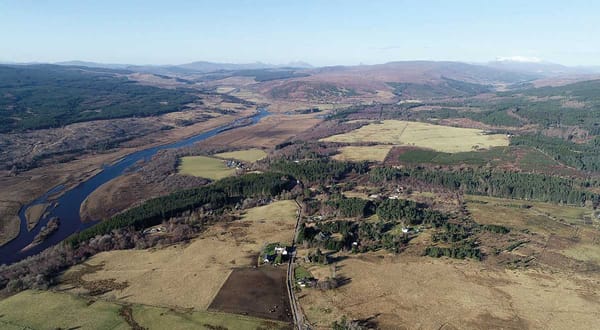
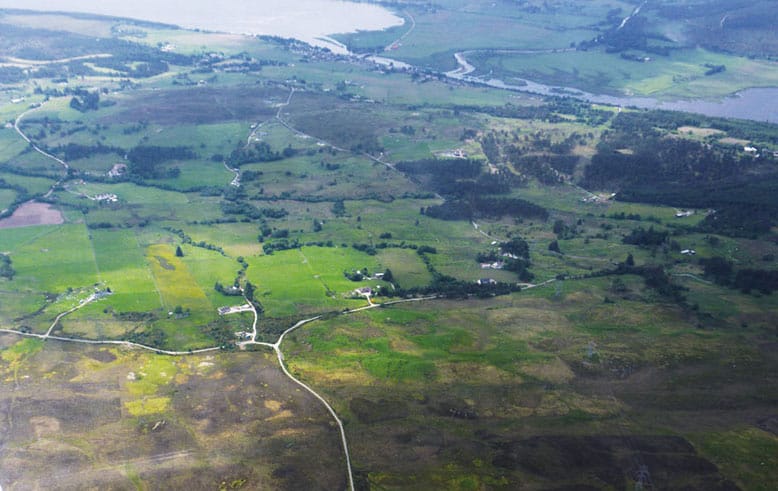
To welcome the first edition of the Kyle Chronicle, I thought we should celebrate our lovely landscape and look at why it has the attractive patchwork of fields, woodland, buildings, rough grazing and hills so beloved by tourists. The photo shows the crofting area of Airdens looking south to Bonar.
This isn’t a natural landscape, it has been moulded by the inhabitants for centuries. And it is crofting that has been the driving force for the last century or so.
The spread of small units across the hill in Strathcarron, Linside, Migdale and elsewhere, each doing their own thing, gives the variety of scenery. Each croft is a house and family so we have the population to keep the schools and the shops open and provide a workforce for hotels and the post. And they generate economic activity by employing fencers, shearers, vets. Without people living and working in an area, you have a museum not a community.
So you have the scenery enhanced, the people retained but you also have good quality food produced in an environmentally friendly and sustainable manner. Most croft land isn’t fit for arable crops so we produce store cattle and sheep which are grass fed, low input and leave a light footprint on the land. Again tourists like to see the animals in the fields kept in a natural setting. It is self evident that we need food so let’s do it in a way that is good for the environment, keeping woodland and retaining peatland with its carbon locked away.
So crofting isn’t dead in the 21st Century – it has a big role to play in the future of the Kyle of Sutherland – but there are plenty of challenges facing agriculture in particular and the wider more remote areas in general. We can look at these in later editions.

Russell Smith is a Scottish Crofting Federation Director and Airdens Crofter