Garden birds
Just how many birds are visiting our gardens? Portable Universe Codec (PUC) technology can help identify them.
By Cherry Alexander
(Left) (Right)
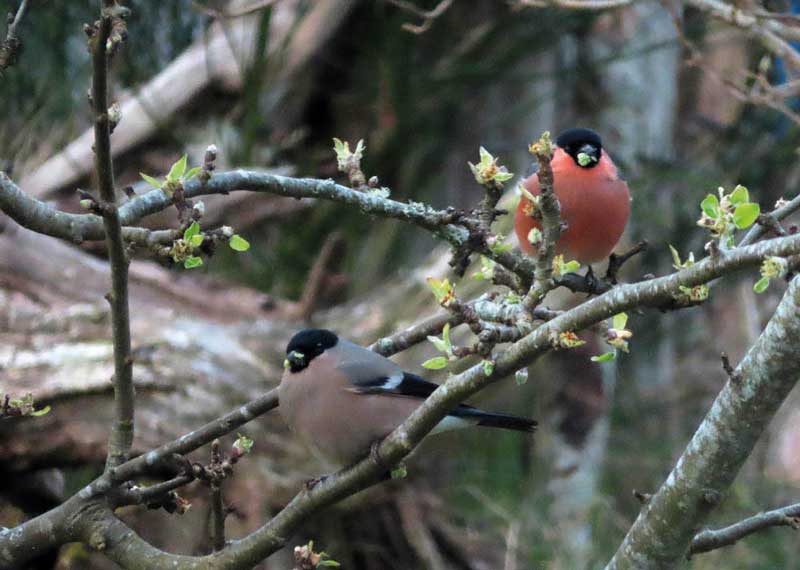
The birds that visit my garden are a constant source of joy to me. Right now, in the winter, the robin is the most vocal of my visitors, he follows me around when I am gardening, and I feel compelled to keep stepping back from anything I am doing that involves disturbing the soil, or leaves, so that he can go and check where I have been working for small, edible creatures that have been hiding there. In the cold weather I had an influx of blackbirds, about a dozen, eager for the food I was putting out between snowfalls. They could have come here from Shetland, or Scandinavia, and will probably return there to breed, as I have fewer in summer. There were no sparrows in my garden when I moved in, but as soon as the bird boxes on the house went up, they moved in. They are a very vocal group, and drown out all the tits and finches that are also around.
The habitat in and around your garden will govern what you are seeing. During Covid, my neighbours noticed a goldcrest in the oak tree at the bottom of their garden and were entranced to have the UK’s smallest bird visit them. The next day as they walked down the garden, a white tailed eagle rose from the same tree and took off across the firth. Scotland’s smallest and largest birds in the same tree in a couple of days is some record. Other neighbours had an exotic visitor a few years back. A rosy starling was in their garden for several days, feeding up on their fat ball feeder and I went round to take pictures. As a child I had seen pictures of rosy starlings in my bird book, and never expected to see one. You can’t be sure what will visit your garden.
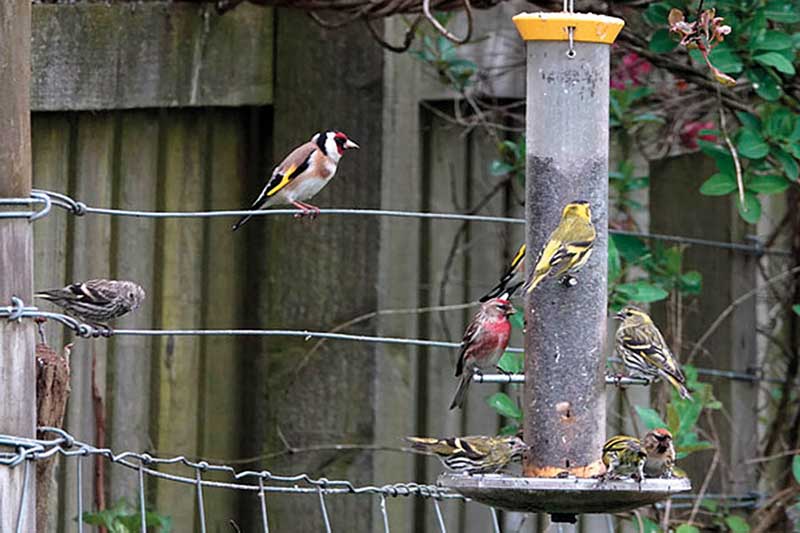
Having peanut feeders, Niger seeds, sunflower hearts and fat blocks means that I have a wide variety of birds at my feeders, and that variety is also attractive to their main predator, the sparrow hawk. Placing the feeders in your garden needs careful consideration, they should be close to cover, so the small birds can dive into bushes when the sparrow hawk arrives, or so that his flight path to the feeder is obstructed by branches. The feeders and the ground under them should be cleaned regularly to avoid spreading diseases. Trichomonosis took a heavy toll of finches and especially greenfinches a few years back and it is spread where the birds gather at feeders. Birds suffering with this are puffed up and appear to have trouble feeding and breathing. It is advised that if you spot sick birds, you stop feeding for several weeks so the birds disperse and don’t spread the infection. Now there is concern, not only about bird flu, but about a virus spread by mosquitos that seems to be impacting blackbirds, this is Usutu virus which has been spreading North across Europe in recent years.
The scientists from the University of Sussex are now calling for the government to urgently reassess the environmental risk of pesticides used in flea and tick treatments and consider restricting their use. The researchers collected 103 blue and great tit nests that were lined with fur, finding that 100% of the nests contained chemicals that are banned for agricultural use but are common in tick and flea treatment. Many of the nests had dead chicks in them. I will have to stop putting the fur from grooming my dogs out for the birds.
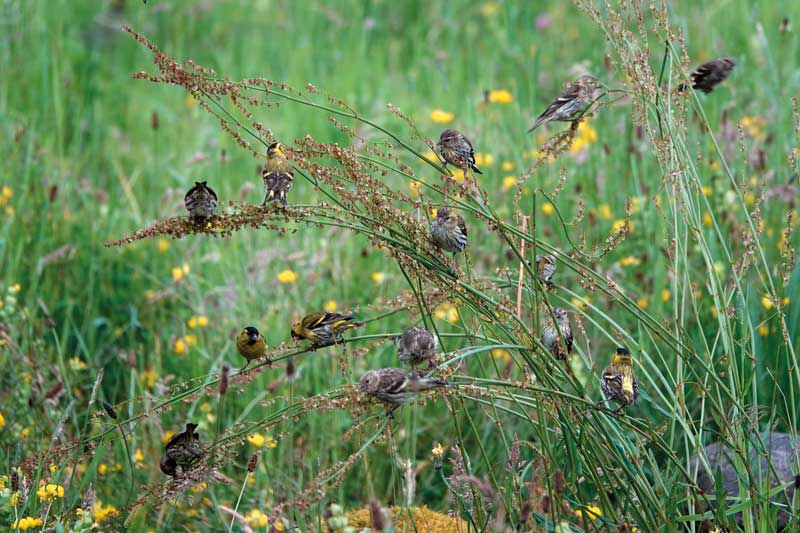
The best bird watchers are other birds and they watch each other and learn. Growing up it was mostly great tits and blue tits that came to the food my mother put out for them. Now I have goldfinches, coal tits, long tailed tits and more recently friends have tree sparrows joining the house sparrows and dunnocks at the feeders, with yellowhammers and tree creepers the most recent winter additions. Where I lived in Dorset, chaffinches were ground feeders, in my garden here they use the feeders quite happily.
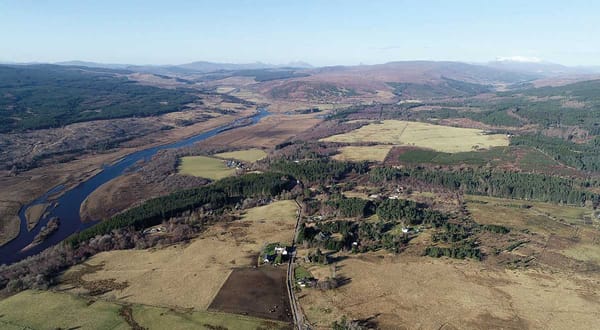
If you visit the Ardgay web page, there is a new and exciting addition under Nature. Marc Foggin has a Birdweather PUC, a device that you put in your garden and it reports back to your phone all the birds it has identified. His tally of 34 species from his garden on Ardgay Hill is available here. It can also be accessed via this link and click on the picture of the PUC.
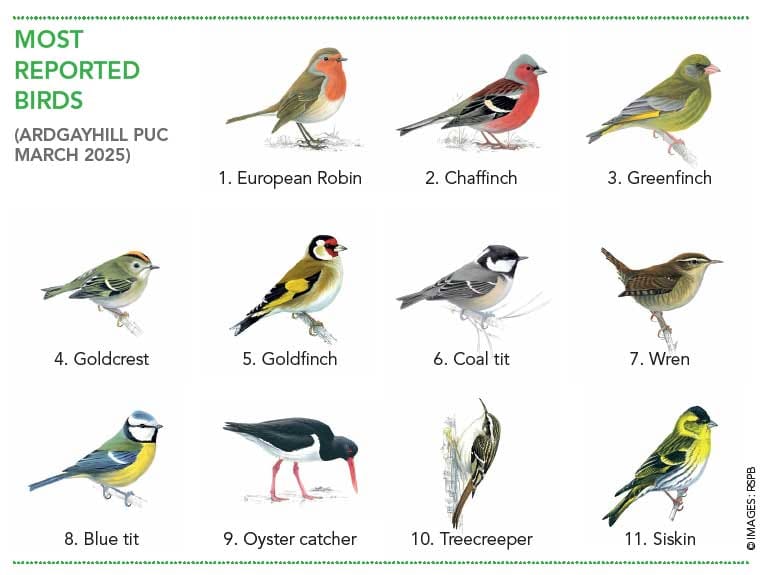
It detected 34 species during the time it was out, with only a couple that it might not be accurate on, There is always the possibility that there may be a vagrant Greater White Fronted Goose wintering on the Kyle, but chances are that the device made a mistake, while the recording lists many species, I noted that the Jays were absent and I know they are around up there, so the records on the margins need to be taken with caution. I also wonder if it will record the starling I have that mimics a curlew, as a starling or a curlew? I have been lent a PUC that is in my garden, where we are more likely to record the waders and sea ducks that frequent the bay below the house. I am looking forward to the arrival of our summer migrants, not just the swallows, swifts and martens but the warblers and other summer visitors. The birds in our garden change with the weather and the seasons but I am always grateful for mine.