Heather
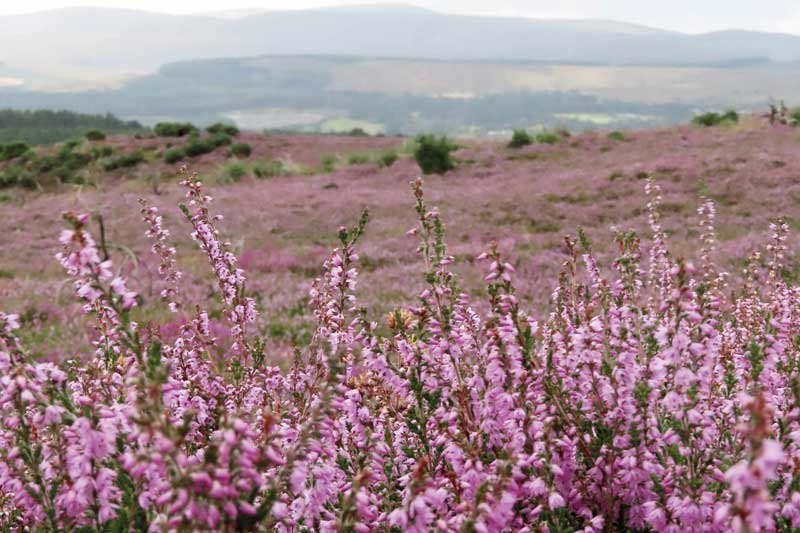
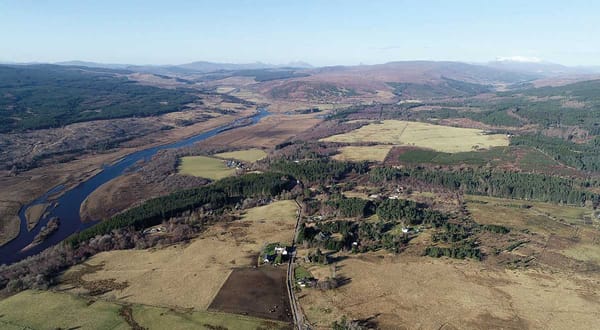
As summer starts to retreat into autumn, the hills and woods of the Highlands put on a spectacular show of mauves and purple. The heather is in flower.
By Cherry Alexander
The ling heather on our surrounding hillsides is Calluna vulgaris, a member of the heath family of plants which also includes the rhododendron that grows wild as well as blaeberry and cranberry. Two other heather members of the heath family bloom earlier in the year, first the delicate grey leafed and pink flowered, damp loving Cross Leaved Heath, Erica tetralix and later, on dryer banks, the deep magenta Bell Heather, Erica cinerea. But most popular, and common of them all is the last to flower, Ling Heather.
As much a symbol of Scotland as the thistle, heather grows from Northern Scandinavia to the mountains of Morocco, and from the Urals in the East to Britain and Spain in the West. But the Scottish have made it their own. Found in a range of habitats from dunes and bogs to woodland and exposed hillsides. Natural progression would allow for the heather to be overtaken and shaded out by trees, first the colonisers like birch and willow, followed by oak and pine, but human intervention and grazing by both deer and sheep have halted the progression by eating the tree saplings and burning for management of grouse also plays a part in some areas. So our hills remain clad in heather.
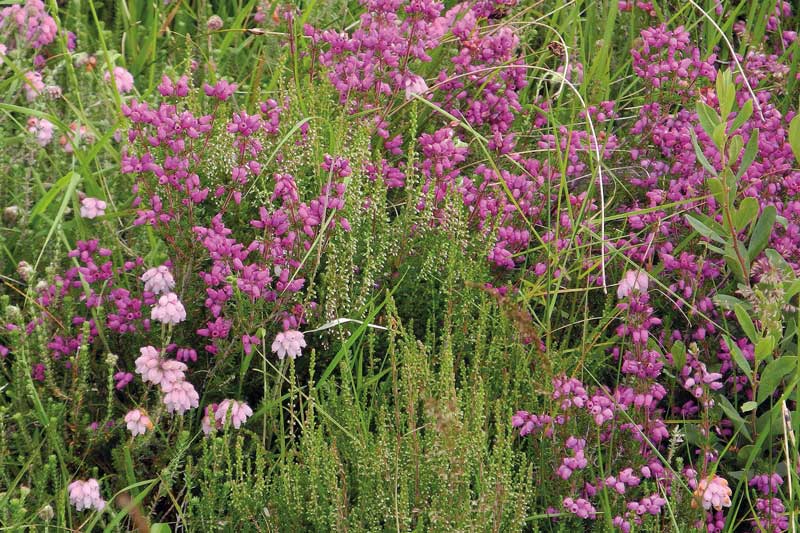
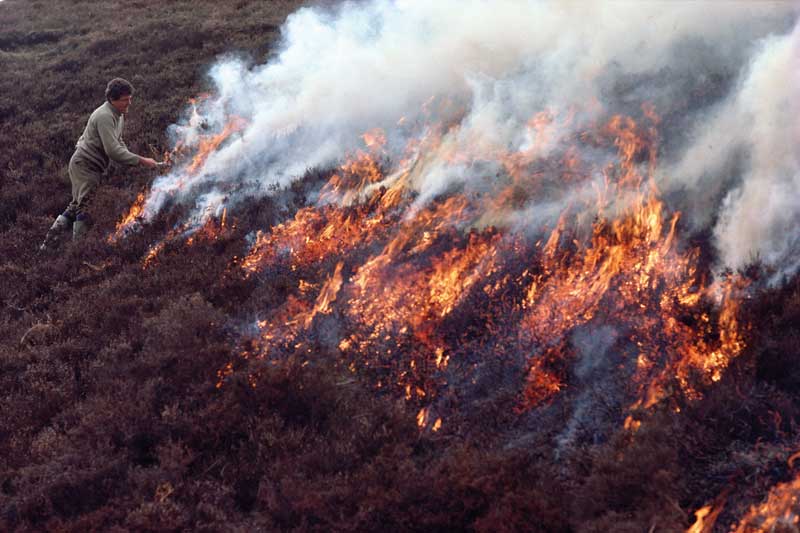
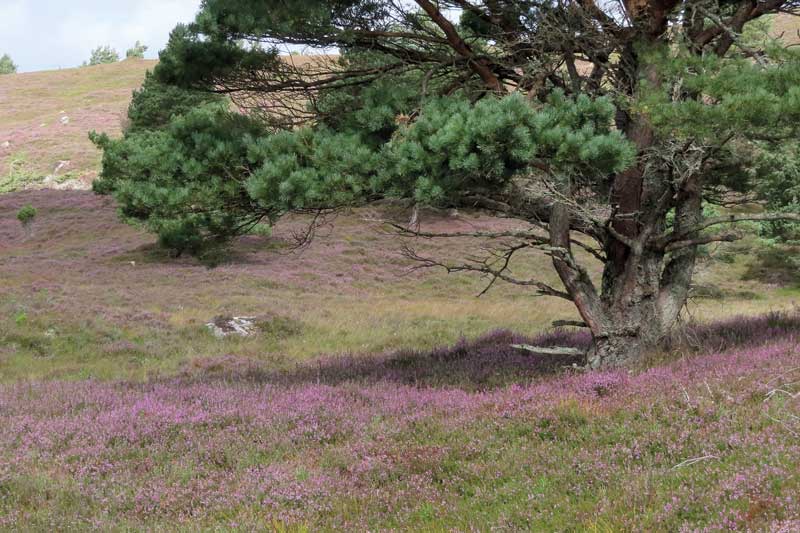
(Left) Pale pink cross leaved heath, bright magenta bell heather and the buds on ling heather. (Centre) Muirburn. (Right) Ling heather under a Scots Pine.© B & C Alexander / Arcticphoto
Muirburn is the practice of burning a patchwork of heather on moorland, so Moor Burn. It is done to encourage the shorter stems of the newly burnt plant to produce new shoots at a height that grouse chicks can reach and to make a variety of heather heights to give varied habitat and offer protection from predators to grouse chicks and other birds in the longer heather. The legislation on this changed in March this year and in Scotland can now only be done under license on designated peatlands and the date it must finish on has been brought forward by 2 weeks to the end of March, to protect ground nesting birds.
Fraoch is the Gaelic for heather and beer brewed with heather has been found in traces on a 3,000 year old pictish vessel on the Isle of Rum. Today you can still buy Fraoch Ale made by a brewery in Glasgow and featuring heather in the recipe that is said to have been handed down through ten generations. The other uses for Heather are limited only by the imagination, It has been used for animal and human bedding, making ropes, and as a thatching material, seen near us on the bus shelter by the War Memorial in Edderton. It was also favoured for its medicinal properties, used to treat everything from coughs to rheumatism and makes a very fine yellow dye. Heather honey is dark, delicious and much prized.
White heather has long been considered lucky, both with connections to success in battle because white heather was worn in the bonnets of Clan Ranald in 1544, and also as a plant that grows over the last resting place of fairies, which is the idea that I favour. I still give a friend sprigs of white heather to take home to her elderly mother, for luck.
Heather has a special place in my heart. In my garden I have a small rowan tree with a heather garden around it. My mother’s ashes are here. Her name was Heather.