History of the Ardgay-Bonar Pipe Band
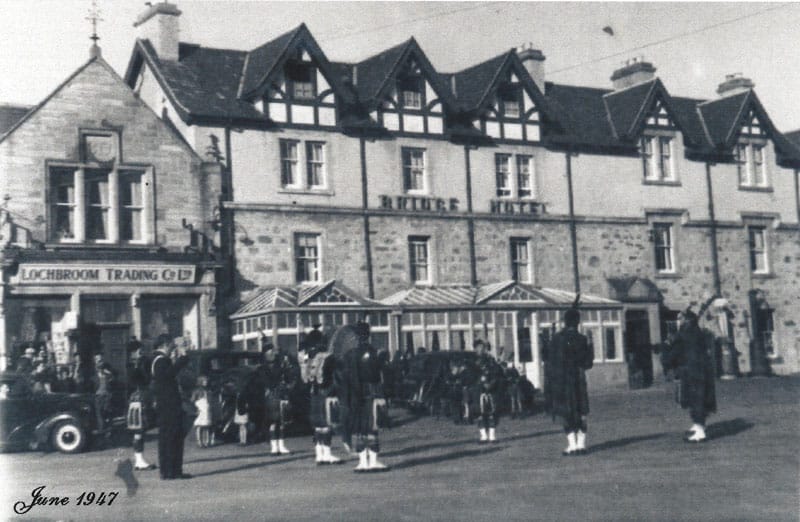
The band was formed in the Drill Hall, Bonar Bridge, on the 24th July 1929 and it was active for over 81 years, participating in competitions, travelling overseas and even recording an LP. Ruby MacDonald gives us an extraordinary insight into its history.
By Ruby MacDonald
The band that eventually became the Ardgay-Bonar Pipe Band was formed in July 1926. Previously, a group of pipers of the 4/5th Seaforth’s had got together under Pipe Major Hugh Grant, Lochend, Bonar Bridge, who went on to become Andrew Carnegie’s personal piper at Skibo Castle.
The band was made up of ex servicemen home from the First World War (1914-18) and they had met to play as a group. They were joined by friends and in some cases family, and wore their own kilts and uniform, giving their army tunic jackets to the drummers. All the pipers had their own pipes and old army drums were acquired for the drummers.
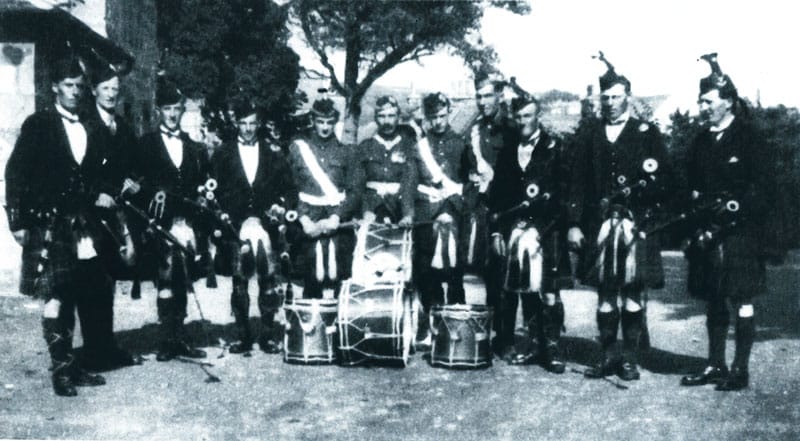
The band was officially formed in 1929 when uniforms were purchased, the tartan being chosen was Red MacPherson tartan, in deference to the new band’s president, Angus MacPherson, Achany House, Inveran. The uniforms, for 9 pipers and 4 drummers were full ‘number 1’s’ (Glengarry headgear, tunic, kilt, plaid, cross belt and waist belt, hose and spats). They were purchased from a Glasgow firm, Thomas Gordon & Sons, who quoted “ten guineas per man”! (£140 the lot!) An approximate cost of a No 1 uniform today would be in the region of £2,700 per person.
Later, Pipe Major Angie Ross, from Sleastry, Bonar Bridge, became the Pipe Major. During the 2nd World War there were no parades. The committee meeting of 23rd November 1939 had its minutes signed on 23th July 1946. This was probably due to the fact that most members of the band were on active war service. The Pipe Band was then led by Pipe Major William MacDonald who was always known as next led by ‘teetotal’ Pipe Major Alexander Murray, well known as ‘Sandy Bobban’. He led the band from July 1956 until February 1971 when he died very suddenly. He was succeeded by Pipe Major Willie MacKenzie until 1976.
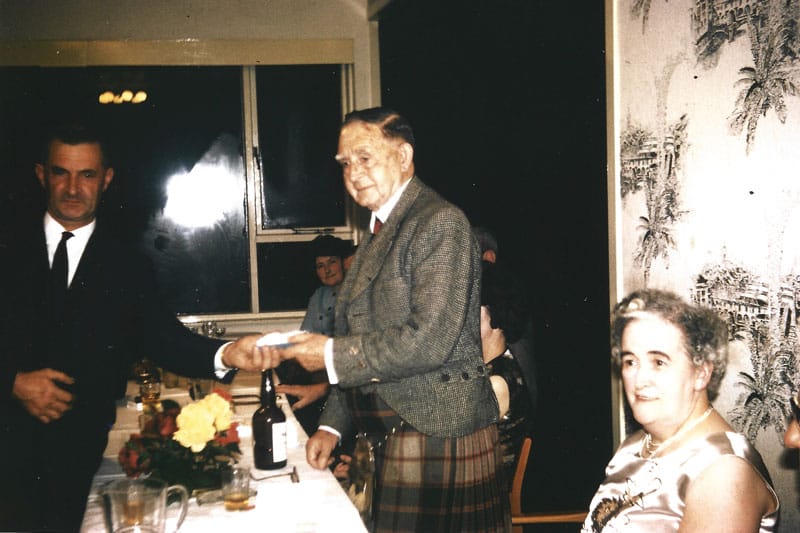
Band Presidents were an integral part of any pipe band and the initial figurehead, Angus MacPherson MBE, was surely the most memorable. He was a renowned piper, piping judge, Highland dancer, and bagpipe music composer. He died aged 99 years, in 1976. The next president was Mr William Sinclair, Blanfield, Bonar Bridge. He was followed years later by Mr George M Morrison, Foinaven, Bonar Bridge. Secretaries and Treasurers were most important members of the committee and the smooth running of the band. There was also, in 1974, a Ladies Committee formed principally to raise much needed funds. The first chairperson was Mrs Evie Clavering of Lairg who served for 5 years, until Mrs Jane Graham-Campbell took over.
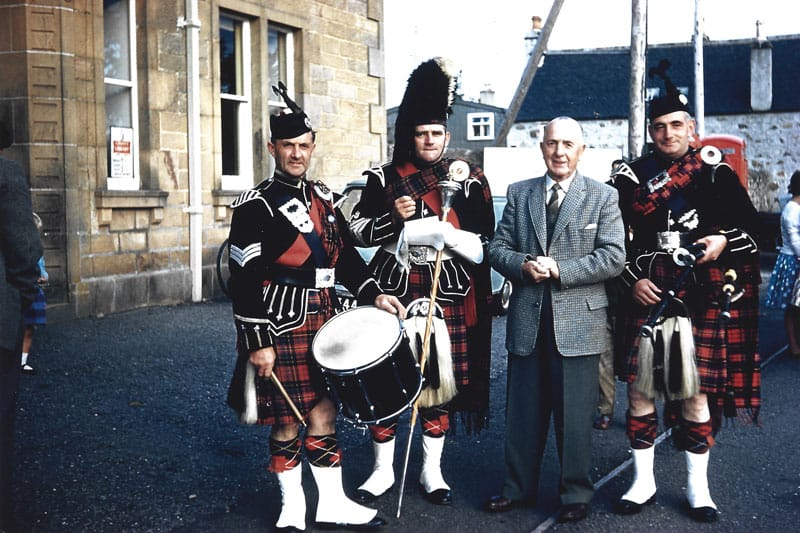
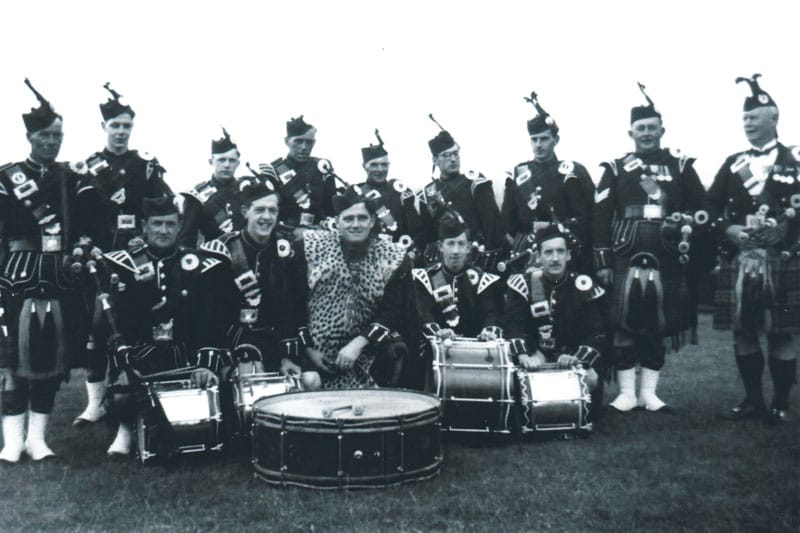
By the 1950s the band had gained a good number of new members, under Pipe Major Sandy Murray, Bonar Bridge. They were joined by players from Lairg and a number of drummers from Tain. The Tain Pipe band had ceased to exist at that time, as they had all been servicemen and tragically only a couple of pipers returned from the war, so the surviving drummers joined the Ardgay-Bonar Pipe Band, and played with them for many years.
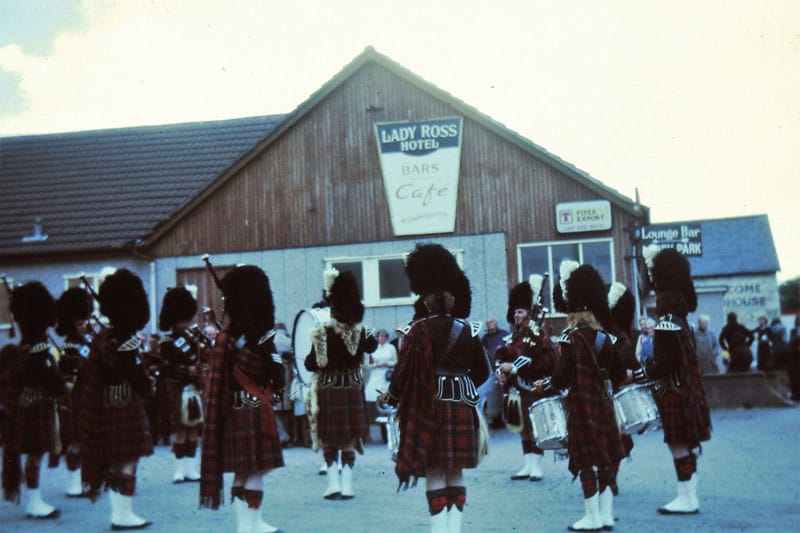
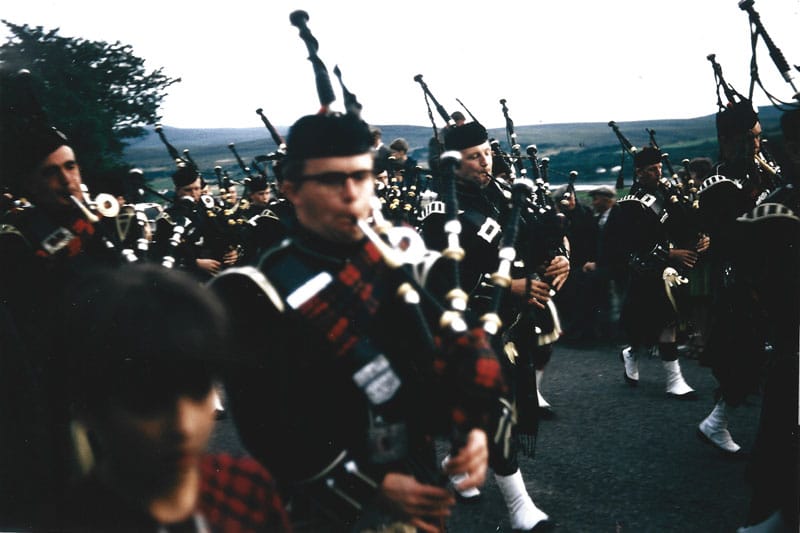
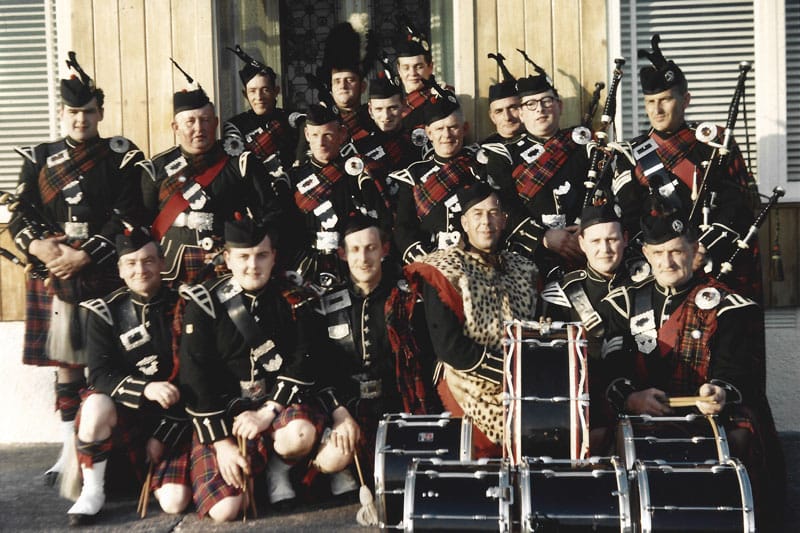
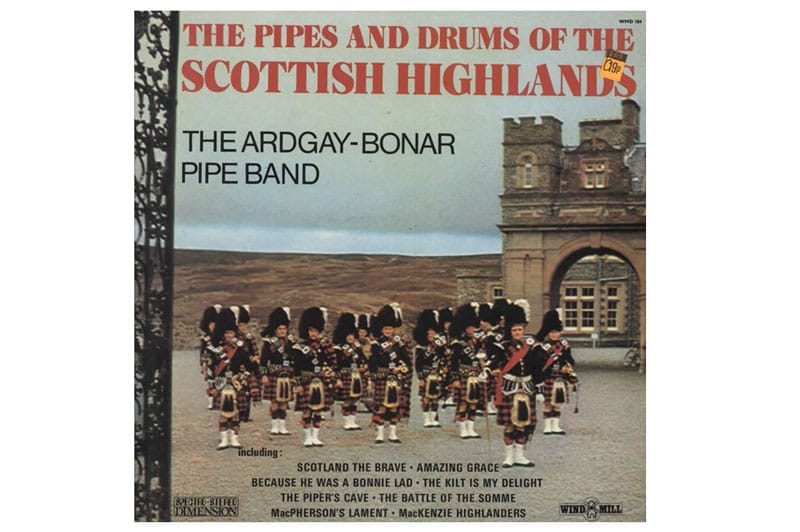
In 1969 the band celebrated their 40th anniversary with a Massed Bands parade in Bonar Bridge. Then their 50th anniversary was celebrated in the same manner. In 1970 all players in the band were provided with feather bonnets, at some expense, but proved to be a great asset to the uniform. In 1973 the band recorded an LP, which can still be found (in charity shops) and in 1974 the band took part in Grade V1 at the World Pipe Band Championships at Stirling, a memorable outing for the band, but not necessarily because of their playing!
The band had a full annual programme, attending Massed Band parades in Wick, Thurso, Dornoch, Golspie and Dingwall. The Highland Games circuit involved Durness, Strathpeffer and Invergordon, with appearances at Galas, weddings, official visits and many functions.
Over the years the Band also played in various overseas countries, but unfortunately, there seems to have been no effort made to take group photographs. The band went from strength to strength and gathered a lot of new players from Lairg and the surrounding areas, also younger members were encouraged to join, gaining experience from experienced tutors.
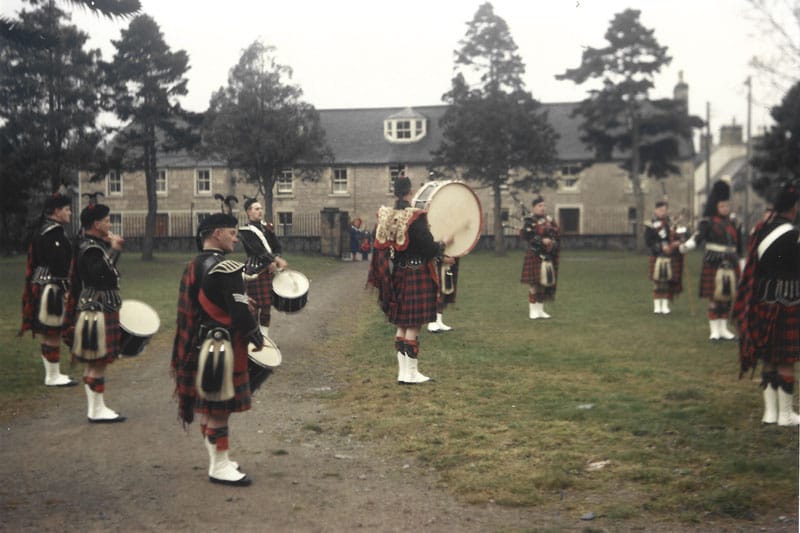
In 1999 the band celebrated their 70th anniversary with a Massed pipe band parade in Bonar Bridge. Along with bands from Sutherland Schools, Sutherland Caledonian, Bettyhill, Dornoch, Tain, and led by Drum Major Murray MacLeod, they were joined by former members of the band. g By Ruby MacDonald In 2010, as other bands across the Highlands, Ardgay Bonar band was struggling to get enough members, with only a handful of regular adults supplemented by youngsters from Sutherland Schools Pipe Band. “We have a lot of young talent (...) but often they head off to college or university or to jobs elsewhere and fail to return to the area” said Graeme Mackay, band Secretary, to The Scotsman.
Ruby MacDonald
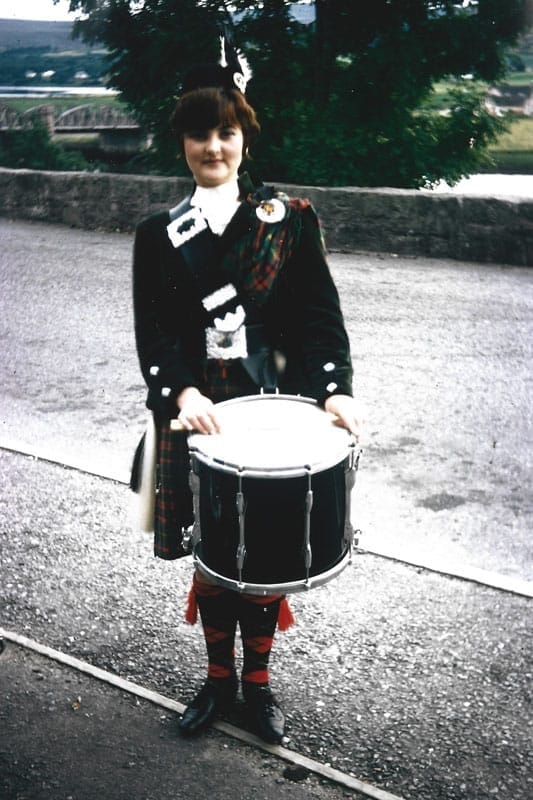
In 1997, a bag full of slides was found at the Bonar rubbish tip by Mrs Chalmers. She asked Ruby MacDonald to have a look at them and the first slide she picked out (of approximately 400) was the one of herself alongside these lines.
Ruby in 1962 on one of her first parades, in a temporary uniform. Mr Angus MacPherson, Inveran, the Band President, decided it was not seemly for a young woman to wear the spats, part of the No 1 uniform. Therefore stockings were provided instead of the hose-tops and spats, and she wore those until she discovered that the spats actually help to keep you upright during a long march, great support for the weary legs. Angus was not around by the time she sported the spats, he would not have approved!