Restoring the peatland of the Flow Country, a project of global significance

Undisturbed peatlands cover just 3% of the world’s land area but they hold nearly 30% of all the carbon stored in land
By Catriona Hill
COP26 brought the world to Glasgow and has raised public awareness of the impact of climate change on an unparalleled level. I had the honour of attending as a representative of the Royal Incorporation of Architects in Scotland (RIAS) and joined 25,000 delegates, from 197 counties, at the temporary city at Glasgow’s SSEC.
The experience was one of hope and despair rolled together and I came away with a clear understanding that if we don’t stop emitting carbon, global temperatures will rise to a level which will destroy our planet. Some fear that the damage done is already irreparable but we owe it to our future generations to do what we can now, and fast.
The summit offered the opportunity to learn of innovative projects, all over the world, from protecting glacier melt with fabric covers, building off-shore wind farms and solar fields to replace fossil fuel power production, and developing hydrogen fuel cells to store green energy, but the project which really captured my attention is right here on our doorstep.
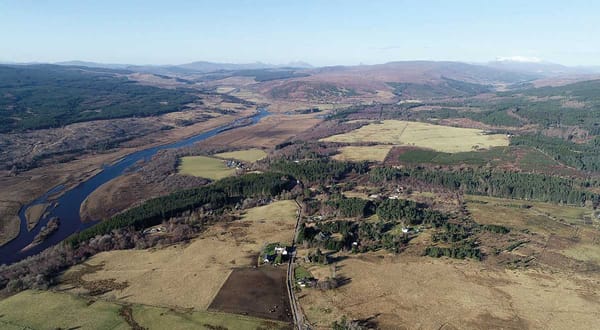
Did you know that the peatland in Caithness & Sutherland’s Flow Country, has the capacity to hold 400 million tonnes of carbon? Staggeringly this is equivalent to twice the carbon held by all the trees in the UK.
Sadly, the damage done through the intense tree planting of the 70s and 80s, an unintended by-product of a government incentive, has exposed the peat and it is now drying out and decaying at rapid speed. With decay come carbon emission in exceptional volume. Imagine three vehicles with their engine running 24/7, on each hectare, and you’ve just about got a visual picture. The simple fact is that dry and damaged peat degrades and emits carbon whilst wet and healthy peat locks it in in equally vast quantities. We urgently need to restore the peatland through deforestation (yes you read that right – trees on their own aren’t necessarily a good thing – they need to be growing in the right place). We also need to block up the irrigation ditches and re-flood the bogs.
Some incredible restoration work has already been carried out and, to date, 2,600 hectares of peatland have been restored. Given that the Flow Country covers almost 400,000 hectares there is still much to do and the race is on.
The peatland is a hidden super power, capturing and storing carbon in such quantity that it is of global significance, and indeed the restoration of the Flow Country has such importance that the area has been nominated for UNESCO World Heritage Site (WHS) status.
Who would have thought that it would take an international summit to reveal what’s right here on our doorstep. For those already in the know, and actively supporting the restoration, your efforts are being noticed and appreciated on a global platform. For the rest of us, it’s time to get involved in whatever way we can. For more information and to support the work in the Flow Country visit www.theflowcountry.org.uk.