Samantha Kane: “I want to be remembered as the lady who saved Carbisdale Castle from ruin”
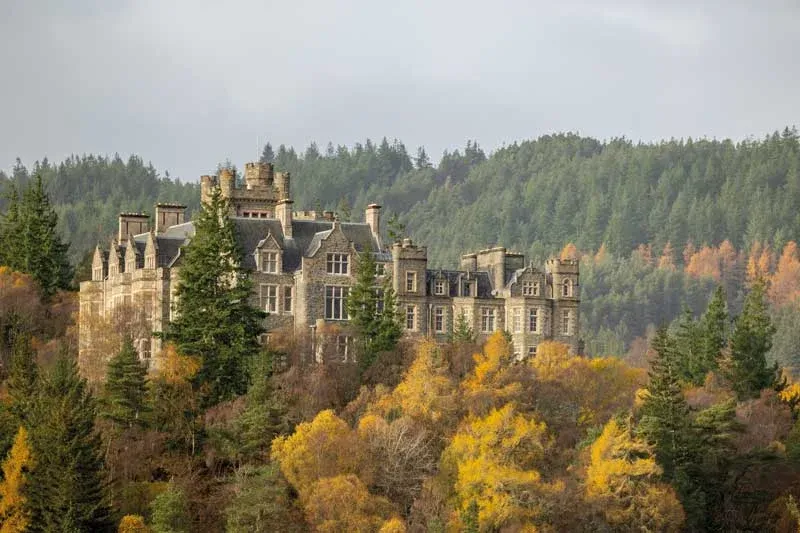
Carbisdale Castle owner Samantha Kane talks about her plans for this important landmark. Over the last six months, a substantial amount of work has been undertaken to restore it to its original grandeur and she is now recruiting for staff in various positions.
By Silvia Muras
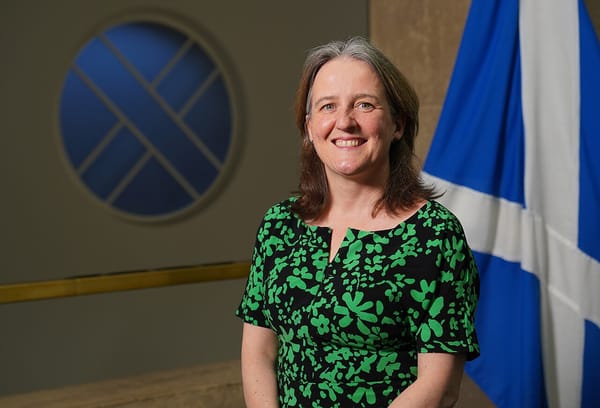
A successful barrister and business woman, publicly known for having had gender reassignment surgery three times, Samantha kindly received us at her home of Carbisdale Castle. The place was bursting with activity, with various tradesmen working on site, finalising the first phase of renovations in order to bring the building back to how it was when first built.
KC: What made you buy Carbisdale Castle?
SK: I read about the duchess in the press. When I came here for the first time, I’ve seen all this falling apart, and the water seeping through the ceiling, in a terrible state. And I thought of the duchess who went through all this trouble to build this castle. There’s an affinity between me and the original lady who built it. And I said, “I’ve really got to save this.” Look at the scenery, this is the most beautiful country in the world. Plus it’s a very important historical building because it housed king Haakon of Norway. They signed a very important legal treaty between the Soviet Union and Norway. Even the case of Sutherland Vs Sutherland, young lawyers learn about it, it gave precedent in law. To see all of that going into ruin, it was kind of heartbreaking. So I said: “Don’t show it to anybody else, I’ll make an open offer, I want this place.” And I immediately acted upon it, in the same afternoon. Because I really think it’s like my calling in life.
KC: Are you planning to live here full time? Will it be open for tourism?
SK: This is both my permanent residence and a home. After working for 42 years in the legal system, and in business, I am at a state in life that I want just to have a nice stately home as is this, and I also want it to be my legacy. I’ve already chosen here in the castle where it would be my mausoleum. I will be buried here and the castle after my death will be open as a museum.
KC: A really long term project...
SK: Because I don’t want that after I die, a son, or a relative, or somebody come and sell it to a hotel chain or something else. But I want in the meantime to have the castle maintaining itself. Through, for example, some tourist activities. We’re distilling whisky, we will have maybe private guests staying and enjoying the area, playing golf. Anything to help maintaining the estate and the castle. I don’t want to be this old lady shut in some castle, locking her door. I want to be part of the community and I want the castle to be the centre of the community, the same as Dunrobin to Golspie.
KC: Some local people have ancestors who were building the castle, or working at the castle.
SK: Everybody has a story about this castle. As a youth hostel, over a million people stayed here. It operated for 70 years. Young and old people from all around the world. People write to me from Canada, from France...
KC: So your short-term plans are first to repair the castle, and then to open it as a tourist attraction?
SK: Some part of it. I’ll make some days, events for the community to come and enjoy the castle. The legacy, the museum, that would be after my death. Then people may contribute at the door and then look at the rooms and everything. But at the moment, it has to be certain days and to respect my residency here.
KC: When it shut down in 2013 there was local outrage, about the closure and about the sale of the works of art.
SK: You see this room? When I bought it, it was all divided, a wall here, a wall there... You could never see that white door frame, it was covered with horrible plaster because they wanted to make it maybe five bedrooms for the hostel and a family room and several toilets in the middle of it. So we ripped all of that out and brought it back. The ceiling was very low and now, look, the whole thing came back as it was meant to be. They sold the art so cheap... because now I put an advert to say I will buy any art back, if somebody bought art from here. They paid for the whole thing half a million, they want for one very small statue £250,000. I bought a lot of pieces back. I’ve got a whole collection of personal photographs of the duchess.
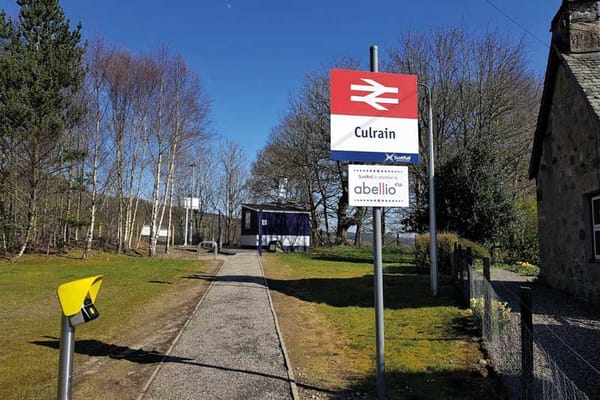
I feel I have full support from the Culrain community, they are really supportive of me and what I am trying to do, and now I want the same from Ardgay, because this castle is important for Culrain, for Ardgay, for Bonar Bridge... As a matter of fact, for the whole Highlands. Saving this landmark should have some priority. In today’s money it’s about £64M what she spent to build this. No expenses spared, and everything is so grand and grandiose. Normally the aristocracy understate the buildings, they think it’s too vulgar to be too elaborate, but the Duchess of Sutherland, ‘Duchess Blair’, she just went over the top. For someone to do that in spite of all the difficulty it’s something inspirational, to be admired.
Sometimes for example the workforce hasn’t turned up, or there is a problem and I think, “Oh my dear, I might just give up.” And then I remember how she built this castle from scratch and it gives me the inspiration to carry on.
KC: What is your vision for the castle in 5 years’ time?
SK: This castle is my destiny, my achievement in life. And to restore it to its original magnificence. I think I would be happy to close my eyes and die and say “I’ve done something really great.” When I come here I feel even more spiritual with nature. I’m here at night looking at this lovely sky. Maybe people can come and learn about respecting the environment, about respecting how the planet is fragile, how we cannot for example cut the trees. I also want to make formal gardens for people to admire. Eventually I want the Duchess Blair to smile on her grave and say “well look, after all that, we’ve got one over them.”
KC: Do you have a message for the Kyle Chronicle readers?
SK: Just to support me and to give me the inspiration, because I think without the people of Sutherland behind me, I will not really achieve what I want to achieve. I want everybody to - at least in a moral way - support what I’m doing. And in return, of course, I’m also supporting the community. I’ve started my own trust to invest in communities and I’m supporting small organisations, sporting clubs, these sort of things.
KC: How would you like to be remembered?
SK: This castle will have two ladies, the lady who built it and the lady who saved it from ruin. I want to be the lady who saved it from ruin. So I could have on my headstone “Samantha Kane, the lady who saved it from ruin.”
KC: On an online profile you appear as barrister, film-maker and novelist
SK: I have many kinds of university degrees because I used to love the university atmosphere. My first degree was Engineering, so I’m an engineer by profession. And then after that I did Law, then I became a barrister at the Supreme Court, and then I actually did a master’s degree in Film-making, so I did some documentaries. And I wrote a novel about life in old Bagdad, which is called Mohammed and Susan. I wrote a few other books as well. (Samantha smiles warmly while talking about her book) I prefer my novel Mohammed and Susan, about a half English girl who falls in love with a Middle Eastern man. It’s set in the 1960s and 1970s which is quite a romantic era.
KC: What’s your favourite place in the Kyle of Sutherland?
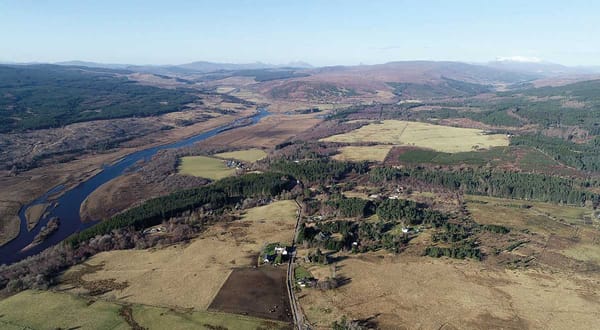
SK: Carbisdale Castle (laughs). I like all the Kyle of Sutherland, all the way to Dornoch. The small communities, the wildlife... and of course the castle which is dominating the landscape when you see it from a distance and you say “wow”. The Kyle of Sutherland has everything: landmarks, wildlife, nature... I’m hoping to see if it can be, first of all, protected, and promoted as well, for visitors. I think tourism will be the main income eventually, rather than energy. Some people say to me “you know what, Samantha? Renewables, green energy, that’s the things you invest your money in.” And I keep saying “No, I think tourism is.” Because if we preserve what we have then we have the best product in the world. It’s a situation where all we need to do it’s not to industrialise it, to spoil it, and just keep it as it is. People will love to see it, it will benefit the communities, the small hotel owners, the little shops, the restaurants, and everybody will be economically better off.