St Kilda, Disease and Immunity
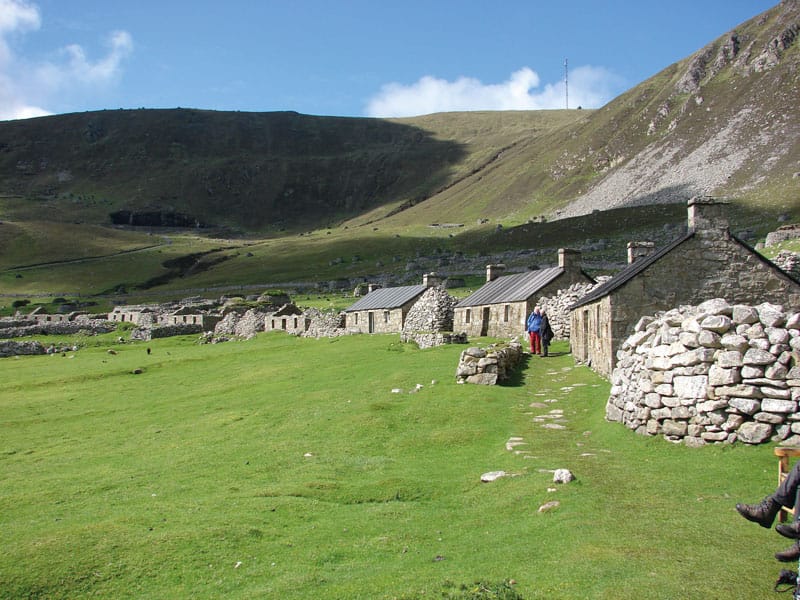
A day or two after any visitor arrived to St Kilda, the inhabitants suffered from outbreaks of a respiratory tract infection known locally as the ‘boat cough’
By James Currall
On August 15th 1727 three men and eight boys were rowed from Village Bay on Hirta, the largest island of St Kilda to Stac an Armin, an almost sheer sea stack 643 feet high five miles away. They had little with them apart from their ropes and collecting bags as they were making the annual collection of eggs, young birds and feathers. This trip was part of the accumulation of provisions needed to see the population of a hundred and thirty through the coming winter. They expected to be there for ten days, when they would be picked up by the returning boat. That pick-up never happened, because during that period the majority of the adult population back on Hirta died.
Until recently it was thought that they died of Smallpox, but recent analysis of the symptoms, who died and the speed of transmission suggest that it was actually chickenpox. Chickenpox is highly contagious, the infection spreads rapidly and is significantly more severe in adults resulting in a higher death rates than in children. The disease is highly contagious even before there are symptoms and spreads rapidly when there is no general immunity in the population. It affects most members of a household and is spread by coughing and sneezing.
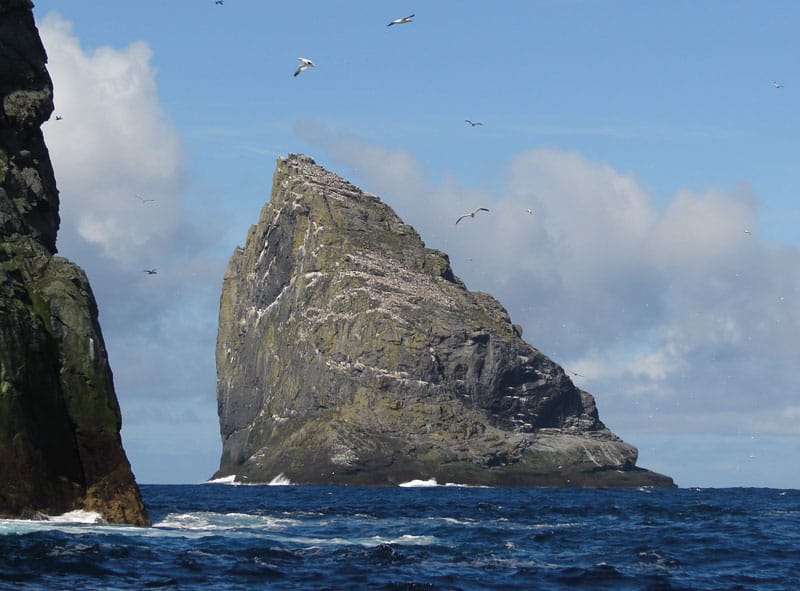
The group of eleven survived on Stac an Armin right through the autumn, winter and spring, living off nothing but the sea birds and eggs that they collected, fish caught with bent rusty nails and rainwater that they found in crevasses in the rock. It wasn’t until 13 May 1728 that they were finally rescued by the Factor’s boat as he sailed past on his way to Hirta to collect the spring rent on behalf of Landlord MacLeod, some 272 days later. The small bothy that they used each year had given them some limited shelter and incredibly all of them survived. However when they got back home only a single adult male and eighteen children remained. There had been 94 deaths in a population of 132, leaving four adult males and 26 children as the survivors.
Revd Neil MacKenzie, minister on St Kilda from 1829 to 1843, who kept meticulous records of cause of death during his time on the Islands, wrote:
“Death after death followed. At last there were scarcely sufficient to bury the dead ... [those who had been left on Stack-an-armin] returned mostly to empty houses, crops generally never reaped, and the cattle roaming about half wild.” The St Kildan population were particularly susceptible to disease, because they had very little immunity. The islands are some 57 miles west of Harris in the Outer Hebrides and therefore completely isolated from other communities most of the time. Since at least the 17th century, there had been reports that a day or two after any visitor arrived on St Kilda, the inhabitants suffered from outbreaks of a respiratory tract infection known locally as the ‘boat cough’, the symptoms of which were “hoarseness, coughing, discharging of phlegm, etc. and in eight days, they were all infected with this un-common disease, attended in some with severe headaches and feverish disorders.”
It is now considered likely that this was a Rhinovirus and that many visitors were carrying this whilst not displaying any symptoms themselves. Dr Macdonald who visited in the 1880s wrote: “The atmosphere in St Kilda is free from a number of disease-causing organisms, which are rife in other parts, where the inhabitants are more or less inured to them... consequently they [the St Kildans] suffer as a rule when exposed to them.”
In 1852 thirty-six St Kildans emigrated to Australia, twenty of them died of tuberculosis on the way, a disease to which they had no immunity and which also affected some of the last 36 residents of St Kilda when they were evacuated to the Scottish mainland in August 1930, once they arrived.
We are living through very challenging times, with Covid-19 spreading unchecked in much the way that Chickenpox spread in St Kilda in the 18th century. In St Kilda there was little immunity to the diseases found in other parts of Scotland and it was visitors to the area that brought these diseases from other islands and the mainland even on relatively short visits.
In Sutherland there are currently very few cases of Covid-19. At the time of writing - 14th May 2020 – there are only 182 confirmed cases in the whole of the Highland Council area (about 1 person in every 1300), which has resulted in 39 deaths (about 1 person in 6000). In the absence of a vaccine less than 1 person in a thousand has any immunity to Covid-19 in this area. This contrasts with Glasgow, where about 1 in 340 have tested positive and 1 in 1200 have died.
In many ways having such a low incidence is a good thing, but when visitors start coming here from elsewhere in Scotland or further afield, then we, like the St Kildans in past times, might be very vulnerable if any of them are carrying the SARSCov-2 virus. That doesn’t mean that the tourist industry that is so important to the economy of this area shouldn’t get back up and running again, but we do need to make sure that we make careful preparations to ensure that those coming here from towns and cities don’t unwittingly do to us what visitors did to St Kildans.