Surge in renewable planning applications
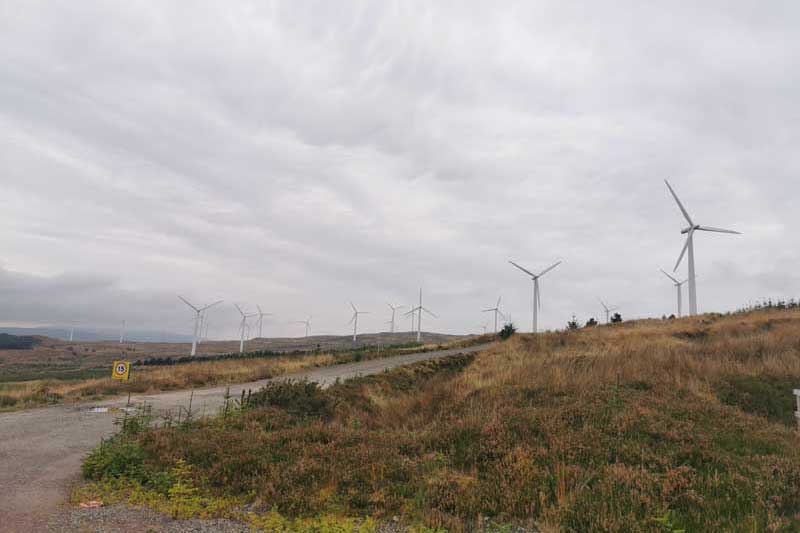
There have been 20 planning applications for onshore wind farm developments in and around our area since 2019 (five of those in the last 12 months). This is more than all the applications received in the 15-year period between 2003 and 2018, unprecedented in numbers, size and investment.
Last September, a slim majority of Highland Councillors approved Cllr Helen Crawford’s motion to review the consultation and planning process to enable communities to have more say over energy generation, storage, and planning applications. The current arrangements leave volunteer-led community councils struggling to keep up with the influx of planning applications. It is hoped future applications will be considered for their Highland-wide impacts rather than on an individual basis. The aim is to avoid a piecemeal approach, and have future projects’ cumulative effect on the Highlands judged.
Back in June, The Highland Council introduced the Social Value Charter for Renewables Investment, which sets out the community benefit expectations from developers wishing to invest in renewables in this area. It expects a provision of £12,500 per MW (instead of the recommended £5,000, set in 2010 by the Scottish Government). The Charter will also encourage community ownership and the creation of a core strategic fund. This move, according to its detractors, could potentially reduce new wind farm developments by 80%, making the region less attractive to investors, and possibly losing £200M funding available to communities and £2 billion to the local economy in the next 30 years.
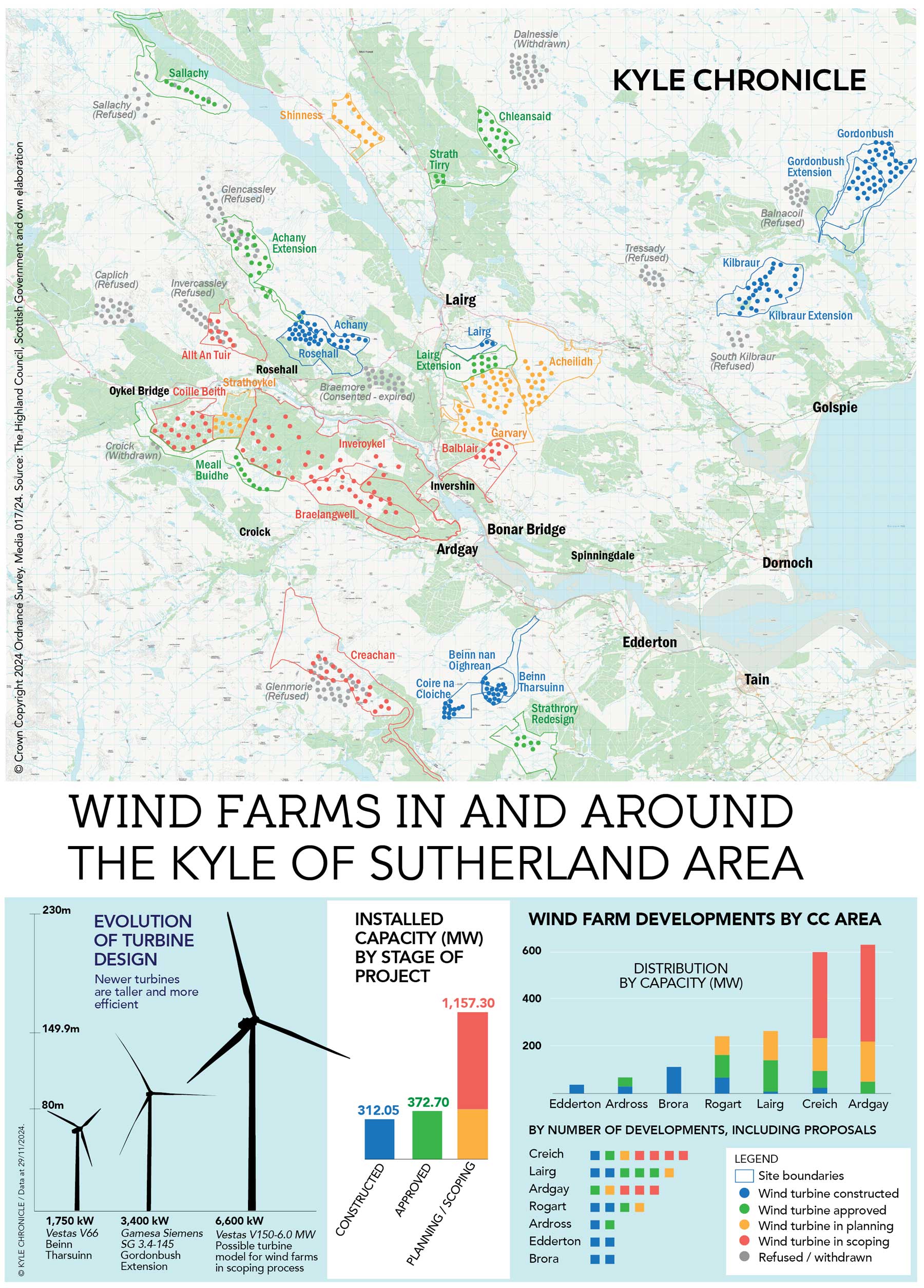
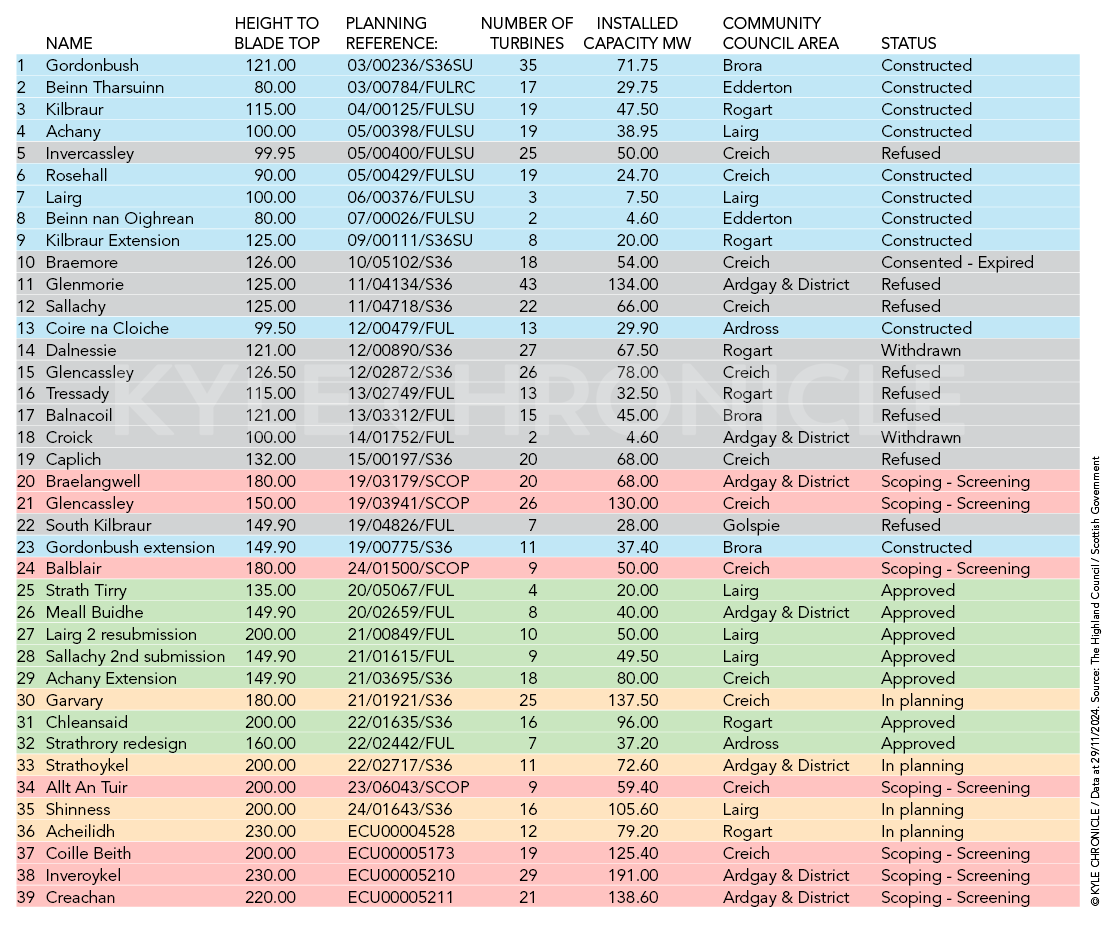
Renewable generation is approved either by local planning authorities for projects of 50MW or less, or by Scottish Ministers for larger projects (Section 36). With modern turbines being bigger and more efficient, the vast majority of recent applications fall within this category. Currently, both UK and Scottish Government policies are moving towards reducing delays in onshore project approvals. In England and Wales, the UK Government has pledged to speed up the process for Nationally Significant Infrastructure Projects (NSIP), shortening the notification period and creating a fast-track consent route. In Scotland, the Scottish Government announced in 2023 its commitment to deliver 20GW of onshore wind by 2030, including a pledge to ensure larger projects pass through the planning process within 12 months, thereby reducing average determination times by 50%, unless a public inquiry is required. The Highland area is considered critical for the Scottish Government to meet its target, estimating around 2.6GW will be required to be constructed in the region by 2030. In and around the Kyle of Sutherland, all the applications received since 2019 – either approved or in planning/scoping – add a total of 1.53GW, 59% of that figure.
Community benefit
This unprecedented level of investment will also bring opportunities. Energy developments are currently contributing to the local area via their Community Benefit Funds, such as SSE (£355,000 per annum just from Achany and Gordonbush); RWE Rosehall (£61,000); Beinn Tharsuinn, distributing £78,000 among 10 community council areas; the funds Beinn nan Oighrean/Rock by Sea (£10,000) and Coire na Cloiche (£105,000), shared between Ardross, Edderton, Creich and Ardgay & District CCs; and Kilbraur (£95,000), shared between Brora, Golspie, and Rogart. This amount of funding could rise significantly if the approved applications become operational, making almost £2M available in community benefit funds. However, it would be far from the potential further £14.5M which could be expected if all the applications in planning/scoping went ahead (1.15GW) and the level of community benefit set by The Highland Council Social Value Charter was achieved. These community benefit funds are index linked, which means these figures increase year on year. Aside from their environmental benefits, these developments are contributing to our local economy via job generation, apprenticeship schemes, and support for local organisations, making significant contributions to key projects in the area.
BiGGAR Economics estimated that 2.6GW will be required to be constructed in the Highland region to meet Scotland’s 2030 target. In our area alone, recent applications total 1.53GW
Another model, community ownership, is gaining momentum. A new community benefit society, Highland People’s Power was launched in November at the Spectrum Centre, Inverness. The group asserts that although Highland communities suffer the coldest weather and host the largest share of energy infrastructure, they pay higher energy costs than other places in the UK. The group aims to try and address imbalances in the current system, by liaising with various community organisations throughout the Highlands and developing a range of community solar, wind, hydro and wave projects. These would either be fully community owned, in partnership with other organisations and/or take a community stake with a private developer.
Currently there is less that 1% of community-owned energy projects in the UK. Around our area, Sallachy Wind Farm, consented in 2022, has offered a 5%-10% stake to the community. The proposal (an offer of a junior share of the debt rather than equity) would benefit the communities of Lairg, Creich, Ardgay & District, Kinlochbervie, Scourie, and Durness and would need the creation of a separate legal entity, a Special Purpose Vehicle. Negotiations are taking place to ensure the profits of this multi-million investment outweight the risks and it proves more profitable than the current model of community benefit fund.
Lately all wind farm applications include Battery Energy Storage System (BESS). These can store excess energy when there is an oversupply, releasing it when demand is high. Although currently there is no obligation for developers to offer any kind of community benefit fund for BESS, some believe they fall in the “generation” category and should have community benefit attached to them, particularly given the concerns about the potential risks and fire hazards associated with battery technology.
Local opposition
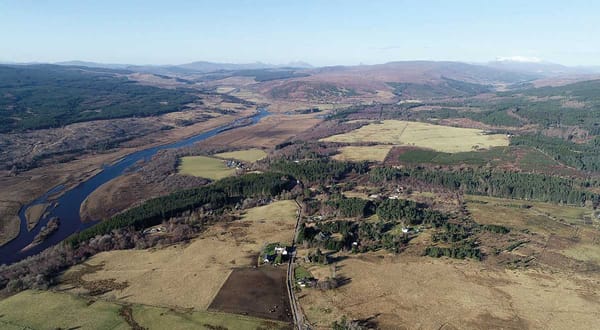
Regarding the recent influx of planning applications, a spokeperson for NORoS (No Ring of Steel Kyle of Sutherland) says: “NORoS would like the Kyle of Sutherland, the Oykel, the Einig and the Cassley, their tributaries and the hills surrounding them to be declared a no-further-build area for renewable energy developments. They are an important resource and house a Significant Area of Conservation, Sites of Special Scientific Interest, and protect critically endangered species. They sustain communities and give employment. With all the wind farms currently built, and with the erection of those that currently have planning consented, our communities have contributed amply to the green energy needs of the nation, and we want to preserve the natural resources we have left not only for us, but for the UK, future generations, and for others beyond these shores who come to enjoy the beauty.”
“We believe renewable energy development policies are being pushed ahead without sufficient regard for essential natural resources, biodiversity and communities. It is crucial that the green agenda does not become a blanket policy of destruction, as is proposed in this area; a balance must be struck. Creativity is the key to fighting climate change, finding and funding those alternatives that will see cities and local communities across the UK playing their part in creating renewable energy, liberating key areas of the countryside such as ours to do what they do best, sustain the world with their biodiversity.”