The letter Yogh
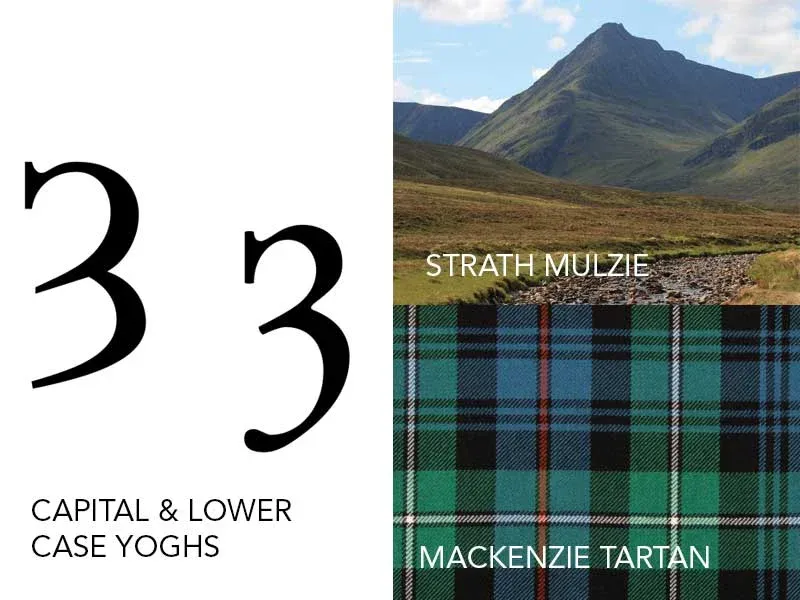
The letter yogh (ȝogh) in Older Scots derived from the letter g, and sounded like a y. In Middle Scots the handwritten character became confused with a cursive z. The early Scots printers often used z when yogh was not available and, as a result, some words have a z in place of a yogh.
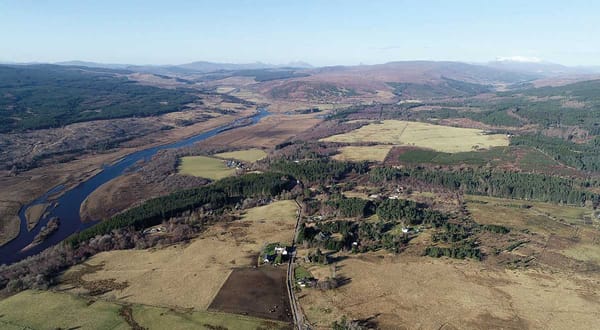
Situated on the western limits of the Kyle of Sutherland area, Strath Mulzie, from the Gaelic Srath Mùillidh (probably ‘valley of mills’); and Corriemulzie (Coire Mùillidh) from Coire (‘corrie, cirque glacier’) and Muileann (‘mill’), are examples of a missing Yogh that became a z but is still pronounced as a y.
Another example is the surname MacKenzie, now pronounced as written, though the original form pronounced ‘makenyie’ (/məˈkɛŋji/), from the Gaelic MacCoinnich, ‘son of Kenneth’, was recorded as standard as late as 1946. The surname Menzies, on the other hand, is still widely pronounced ‘Mingis’.