The scandalous life of Mary Caroline, Duchess Blair
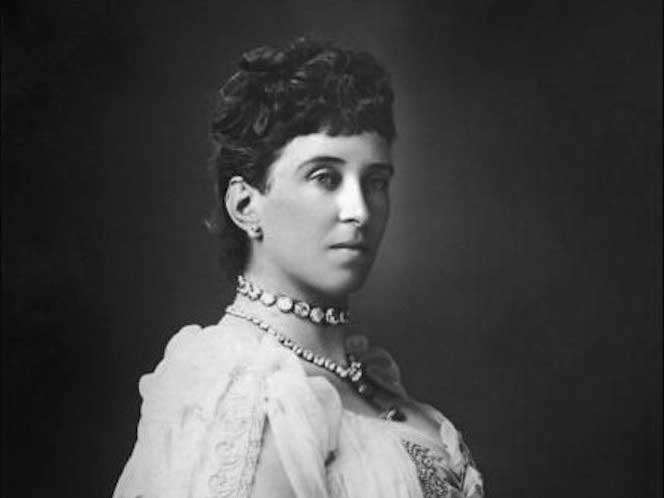
“She would not give her stepson the time of the day.” A victorian global celebrity, Mary Caroline Blair (née Michell), Duchess of Sutherland, had a life worthy of a period drama.
One of the better known landmarks of the Kyle of Sutherland is Carbisdale Castle, built for the second wife of the 3rd Duke of Sutherland as part of a settlement, reached in 1894, which ended the litigation between the dowager Duchess and the Sutherland family. The case needed the intervention of the future King Edward at the request of Queen Victoria (Duchess Anne, the Duke’s first wife, had been a close friend of hers). The matter was the cause celebre of the year and reported by the press worldwide.
A minister’s daughter
Mary was born in 1848. Her parents were Rev. Richard Michell and Amelia Blair. Catherine Layton tells in The Life and Times of Mary, Dowager Duchess of Sutherland that Mary Caroline grew up in Oxford in an environment “where the good connections, education, intellect, and styles of speech that promoted social mobility abounded.”
She married her cousin Captain Arthur Kindersley Blair, a Lieutenant in the 71st Highland Light Infantry and 14 years her senior. In the words of Dr. Bruno Bubna-Kasteliz, one of her descentants: he was “a rather melancholy man” and “the marriage not a happy one. He shot himself in 1883 [...] This event was officially and euphemistically reported as a ‘shooting accident.”
Captain Blair had resigned his commission in 1861 and worked as land agent and business manager for the 3rd Duke of Sutherland. This fact generated much especulation when, soon afterwards, the affair between the Duke and Mary Caroline became publicly known.
Onboard the sans peur
It seems that the Duke was getting closer to Mary Caroline at the expense of the relationship with his wife and children. This is exemplified by an incident mentioned by Charles in The Jailbird Duchess, in which in 1887, a gravely ill Duke chooses to have Mary Caroline at his bedside and sends his wife and children away, something that is said his eldest son Cromartie would have never forgiven.
The couple spent most of the following year travelling aboard the Duke’s yatch Sans Peur. She travelled as “Lady Clare”. They visited India, Singapore, Bangkok, and they were guests of the King of Siam. In 1888 they went to Florida, where the Duke had bought a large property, the Sutherland Manor Estate. Duchess Anne died in November and, despite Queen Victoria asking them to wait for a year, they married less than four months later in the Church of the Good Shepherd in Dunedin, Florida.
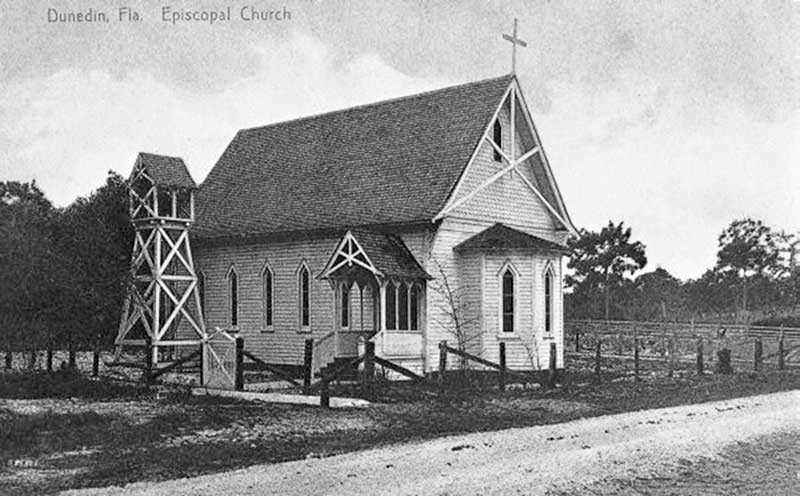
This rather hasty marriage defied all the conventions on appropriate period of mourning. The newly weds came back to Britain and although the Duke was too high-ranked to be ignored, the best society didn’t accept the new Duchess, nicknamed ‘Duchess Blair’.
A duchess sent to gaol
In August 1892, the duke made a will just a month before his death leaving all the property not entailed to the Duchess. This will was opposed by the 4th Duke and the whole of the Sutherland family. Litigation started under Scottish law. As part of the process, some bundles of papers were to be opened in front of the solicitors. Reportedly, she took a paper, crossed the room, and threw it in the fire. The Duchess said it was a personal letter from the Duke and apologised, but was ordered to pay a fine of £250 and to be imprisoned for six weeks for contempt of court. This was inconceivable for a Duchess. However, she had a luxuriously furnished cell, and was even allowed to receive visits from her friends in prison.

Third husband
In 1894, a settlement was reached with the Sutherland family. She would give up all her claims in return for £500,000 plus a ‘suitable accommodation in Ross-shire, Carbisdale Castle. Two years later, in 1896, she married Sir Albert Rollitt but they decided in 1904 to live apart.
The last scandal of her life was the theft of her jewels, valued at £30,000, by the jewel-thief ‘Harry the Valet’, in a train from Paris to London. She died after a short illness in 1912 and, following instructions from her will, she was buried in Trentham under the same headstone as the 3rd Duke of Sutherland.