The seer Swein Macdonald
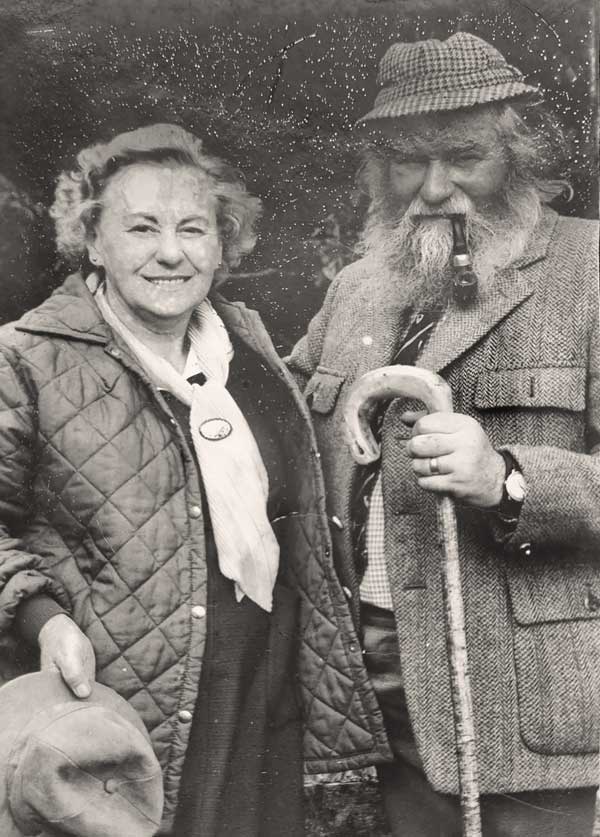
Swein MacDonald rose to fame in the 1970s for his mystical predictions, fueled by alcohol, darkness, and fiery emotions. MacDonald mesmerised audiences with his extraordinary gift of ‘second sight’ and a flair for controversy. With a glass of whisky in hand and incense burning in his darkened crofthouse in Kincardine, Ardgay, he offered psychic readings and foresaw major historic events for over 25 years.
By Elizabeth Lunardini
Swein MacDonald, born in Elgin in 1931, displayed psychic abilities from a young age. His daughter, Gaye MacDonald, recalls a moment when Swein, at just seven years old, predicted a tragic accident involving a local forester. This prediction proved accurate despite his lack of prior knowledge or connection to the event. When Swein’s mother asked how he knew, he simply said, “I saw it happen.”
Initially working as a stonemason, Swein MacDonald later joined the Ministry of Works’ ancient history branch. During this period, he suffered a severe head injury from a load of bricks, resulting in tunnel vision, loss of taste and smell and problems with balance. Despite these challenges, he became known as ‘The Highland Seer,’ first performing with his wife, then on his own, with his distinctive staff adding to his enigmatic image.
The Gift of Second Sight
Second sight, a term rooted in Scottish folklore, refers to perceiving events beyond the ordinary scope of human senses. Swein MacDonald described his visions as fleeting images, like scenes “flashing on a television screen,” though he did not always understand them. He explained that hearing a person’s voice was enough to trigger these visions; physical presence was not necessary. MacDonald viewed his abilities as a ‘chosen gift,’ best used wisely, and noted that his predictions were more accurate during heightened emotional states, especially anger. He believed his ability to see beyond a person’s physical presence allowed him to foresee future events, whether joyful or sorrowful. When asked about disclosing impending sadness, he replied, “It is not mine to keep. I have to tell the person what I see.” Swein MacDonald told Elizabeth Sutherland, author of Ravens and Black Rain: The Story of Highland Second Sight, that his gift required continuous practice, similar to strengthening a muscle. He believed that the more he exercised his abilities, the more effective they became.
Public Life
In the 1970s, Swein MacDonald gained significant media attention. He became a regular feature on Moray Firth Radio, hosting live fortune-telling sessions every Friday the 13th, and occasionally appeared on television. His fame spread beyond Scotland, with The Herald reporting that celebrities and members of the nobility sought his consultations. Offers came from the United States, Switzerland, and the Middle East, as wealthy and influential individuals sought his predictions.
Gordon Smith, the Daily Record’s psychic barber, reflected on his legacy: “Swein MacDonald helped guide many at crossroads in their lives, offering hope to the hopeless and enlightenment to those whose views of life seemed clouded.”
Swein’s predictions ranged from highly accurate to occasionally vague. He acknowledged that his visions were “not 100% correct all the time.”
Testimonials
Personal readings provided compelling evidence of his abilities. In a BBC Archive interview, Alan Ross experienced Swein MacDonald’s psychic reading firsthand. He made strikingly detailed observations about Ross, including noting a mark on his leg despite him being fully clothed, and remarked, “Although you wear clothes, I can see beyond that.” He perceived personal distress, noting, “I sense dark pain within you.” Ross, initially sceptical, later remarked that “guesswork would not get that,” emphasising the impact of Swein MacDonald’s predictions.
Another anecdote from The Northern Times recounts how Swein MacDonald, angered by a critic of his work, foretold a severe car accident for the man. He ominously warned, “You don’t have a future. In a year’s time, I wouldn’t want to be in your shoes because you’ll have no need for them.” A month later, the man was involved in a serious car accident that left him disabled and confined to a wheelchair for three years before his death.
Jamie Stone, in the John O’Groat Journal, offers a vivid illustration of Swein MacDonald’s influence. Stone recounts an experience from his youth when he and his friends had their fortunes told by him. The setting was dimly lit, with the scent of incense lingering in the air. A glass of whisky often sat nearby, fitting Swein’s mystical aura.
He began his reading by describing a scene from Stone’s childhood: “I see a small boy running by the sea with a large yellow dog...” This accurately depicted Jamie Stone’s early years, as he had grown up on a farm near the Dornoch Firth with a yellow dog named Gus. Swein MacDonald also foresaw that Jamie Stone would work in the oil industry, a plausible forecast given the sector’s prominence at the time. This led Jamie Stone and his friends to debate whether Swein MacDonald’s insights were genuinely prophetic or merely clever guesses and psychological tricks. Although one prediction about a motor accident at the Quebec Bridge near Tain has not come true, it left a lasting impact on Jamie Stone. Reflecting on this, he noted, “The human mind is a strange thing, and the memory of Swein, even after all these years, flashed into my head as I sat in the House of Commons, marvelling at how unpredictable politics can be.” He concluded, “In politics, expect the unexpected,” drawing a parallel between the unpredictability of MacDonald’s insights and political events.
Controversies
Swein MacDonald’s career was not without controversy. A notable instance involved his revelation of sensitive details about a Glasgow-based news editor during a phone call. According to The Herald, the editor was startled when Swein said, “I don’t like your attitude, my man, and furthermore, you are conducting an illicit affair,” leading the editor to end the call abruptly.
Public performances also stirred controversy. Swein MacDonald’s readings sometimes included inaccuracies or overly general statements, which critics dismissed as mere “highland mist.” He preferred private consultations, explaining, “If you get too deep in a public meeting, they won’t accept it,” and emphasised, “What is said with them is never spoken about outside of these walls.” He believed that public readings made people uncomfortable due to the exposure of personal issues.
In a BBC Archive video, Swein MacDonald made predictions about audience members, including a woman with three children whom he predicted would soon have a fourth, a man with a sore back, and advising caution to another man about a fishing area. While these observations were accurate, critics considered them too vague, with one attendee noting, “You canny go wrong saying anybody’s got a sore back.” The Highland Council also took issue with MacDonald for constructing a sacred chamber behind his croft without permission, as part of a peace-promoting initiative. The council ordered him to demolish the structure.
Additionally, he was involved in a public dispute with a columnist known as “The Sentinel” from the Northern Times. The conflict centred on the validity of his abilities, but Swein MacDonald ultimately prevailed when the columnist failed to attend a public challenge where Swein was set to demonstrate his skills.
Swein MacDonald, who some of our readers may have known personally, remains a notable figure in the history of psychic phenomena, remembered for his impressive predictions and the controversies that surrounded his work. Although he passed away in 2003 at the age of 71, his legacy as a Highland seer continues to spark debates about the nature of second sight and the limits of human perception.
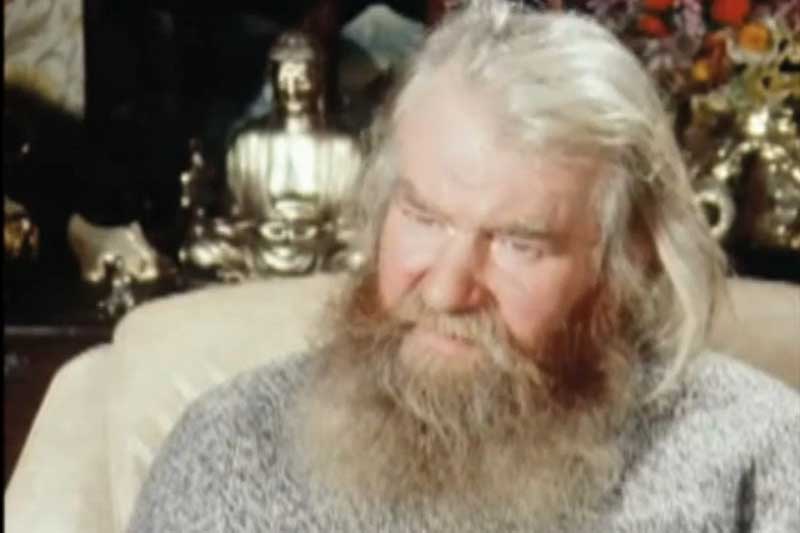
His fortune-telling earnings are said to have been donated to charity
Notable predictions
Some of the predictions that captivated the public include:
- The marriage of Prince Charles and Diana and their subsequent separation.
- The birth of Prince William within a year of their marriage.
- The poll tax riots.
- The closure of the Invergordon aluminium smelter in the early 1980s, resulting in significant job losses.
- The Braer tanker disaster off Shetland, which he reportedly foresaw three months in advance.
- The Falklands War in 1982.
- The assassination of Lord Mountbatten in the west of Ireland three years before it occurred.
Living with the gift
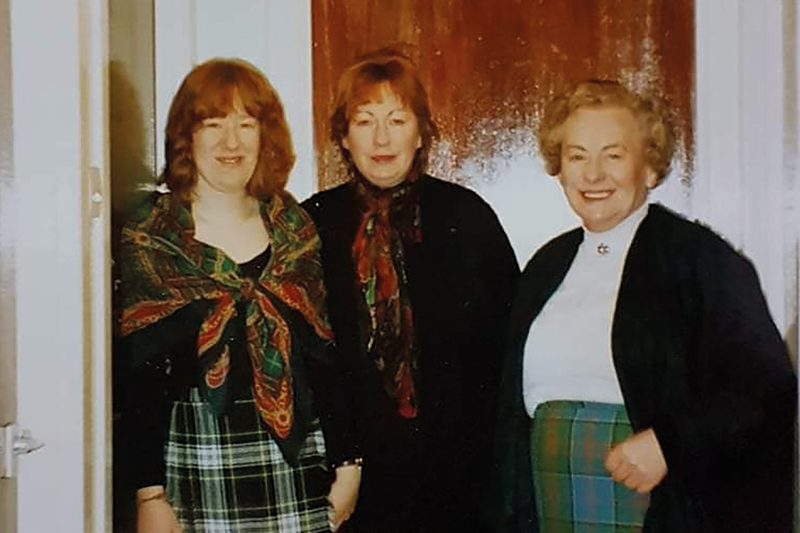
Swein’s wife Isobel and also his daughter Gaye have the gift of second sight, which can be isolating and misunderstood.
In their youth Swein and Isobel MacDonald performed together under the stage name “The Highland Seers”. After eloping to Glasgow, they joined a psychic group, later settling in the Highlands in 1971. Historically, discussing or practising second sight was taboo and often conducted in secrecy. Discreet spiritual gatherings were common to avoid societal backlash. Swein and Isobel MacDonald were involved with the spiritualist church in Glasgow, where their meetings remained secret, though they did demonstrate their abilities at psychic fairs.
Often overshadowed by Swein, Isobel MacDonald was a formidable psychic in her own right. Isobel’s abilities were equal to or even surpassed Swein’s. However, she had to set aside her phychic work due to the demands of managing the household and running the croft. Isobel found it very draining to balance psychic sittings with her domestic responsibilities.
In an interview with BBC Pebble Mill, Isobel MacDonald discussed her psychic abilities recalling an experience where she sensed a couple’s impending breakup. Tragically, this prediction came true when the woman was killed months later. Isobel had informed some villagers of her premonition and she received confirmation of the woman’s death. She also recounted predicting the funeral of a local man; he passed away within weeks of her vision.
Carrying on the Legacy
The legacy continues through their daughter, Gaye MacDonald-Wilson who has embraced her family’s psychic heritage. Initially struggling to connect with her parents’ psychic work, she now fully embraces her abilities and integrates them into her current practices as a hedge witch, Reiki master, and psychic medium based in Ardgay. She focuses on deepening her empathy and healing skills, such as when reassuring a client about a shadowy figure in their home, helping them view it as a supportive presence rather than a threat.
She addresses misconceptions about her parents’ psychic abilities, disputing the idea that her father’s abilities emerged solely after a head injury, noting, both Swein and Isobel had their gifts all their lives.
Gaye plans to teach Scottish second sight and folklore, and hopes to establish a holistic retreat that combines spiritual and mental health support, grounded in her heritage.