Wildflower meadows
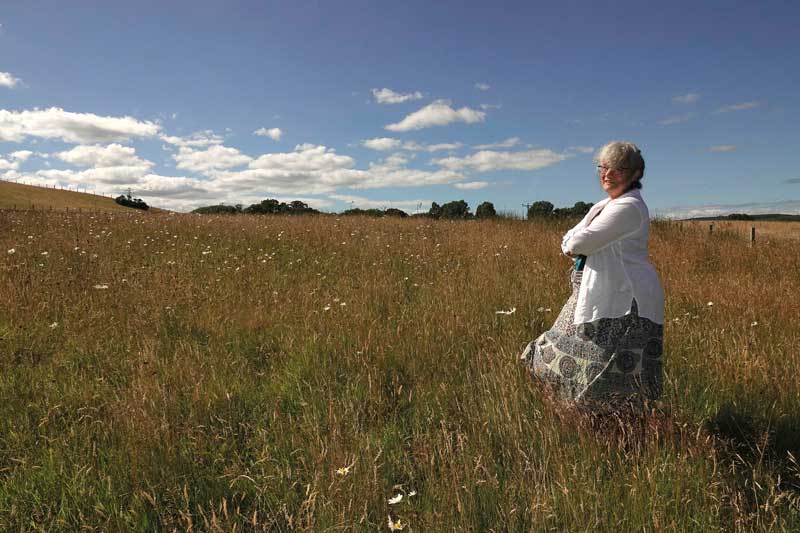
They are great for wildlife and diversity, providing food and homes for invertebrates, mammals and birds.
By Cherry Alexander
Isabella Tree, who farms at Knepp in Sussex, which is famed for its successful rewilding project, encourages gardeners to abandon perfection. “Perhaps the greatest insult to nature in a garden is the monoculture lawn. A nature-friendly gardener might cut out the herbicides and pesticides, reduce the mowing, encourage lawn flowers, and allow rougher areas of long grass as cover for wildlife. Rewilding takes it even further”.
We are being encouraged to let our lawns grow long and flower-full in No Mow May, but many people are taking it a step further. I thought I would investigate the difference between my own areas of rough grass and those on a neighbouring farm, and try to share their diversity.
We moved to our plot in Kincardine about ten years ago and the plan was always to sow part of the ground with a Scottish Wildflower Seed Mix. To this end, the builders left me with two inches of topsoil; low fertility suits flower rich meadows as it disadvantages the grasses. Other parts of the garden were treated differently, and now 10 years on, I am surprised at how varied they are.
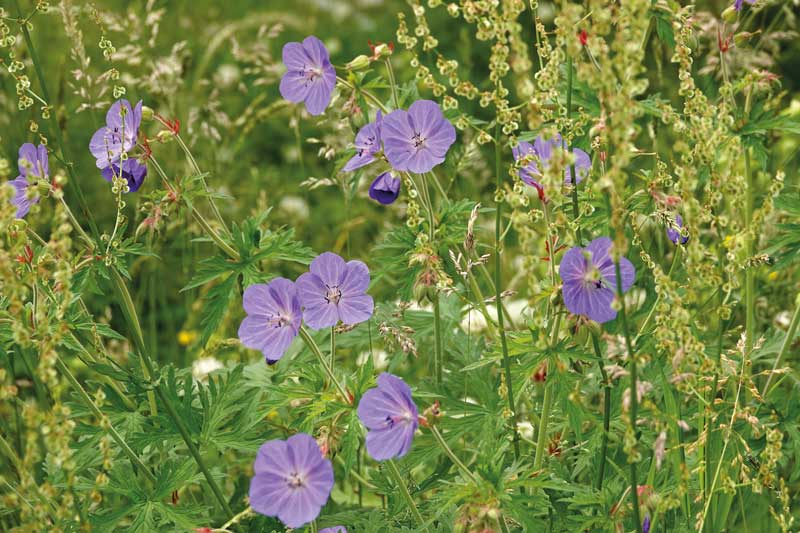
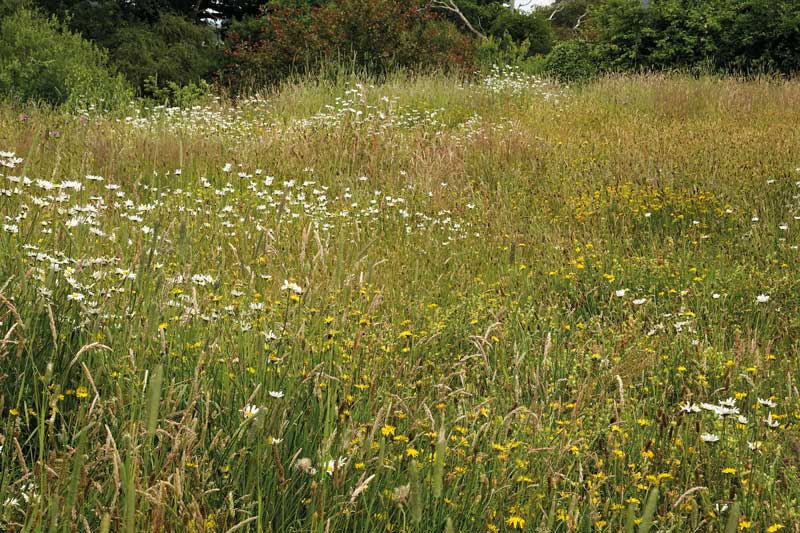
(Left) Flowers in the planted wildflower meadow at home. (Right) Drifts of daisies and hawkbit, with an underlayer of birdsfoot trefoil, yellow rattle and ribwort plantain, bees delight. © B&C Alexander / Arcticphoto
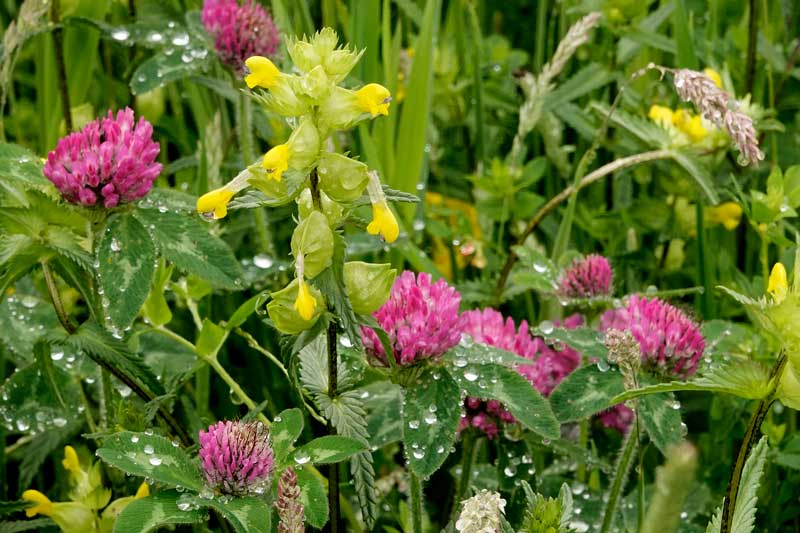
I would never advise anyone who can muster patience to sow a seed mix; although this area of the garden is dramatic, as a flower rich sward with delicate native grasses, it is a total failure. The Timothy grass is nearly chest high and the drier areas are just a carpet of ribwort plantain. The bees, bugs, mice and birds don’t care about this and have had a wonderful summer nectaring on the yellow rattle and the birdsfoot trefoil, the siskins enjoy communal feeding on the sheep sorrel seed heads and now the goldfinches are on the knapweed seeds.
Between the sown meadow and the railway embankment is an area that was never disturbed by heavy machinery or any extra seeding, it is rich in primroses, violets and pignuts in the spring but now is just wild raspberries and grass. The area outside our gate, which has been cut once a year and the cut grass raked up, is what I would have wanted where the sown meadow is, soft native grasses and a few flowers.
From our windows we can see across to the wildflower-rich hay meadows that have been sown on the Hirsel, by Donald and Donna Gillies as part of their regenerative farming plan, under the Agri-Environment Climate Scheme. I eye it with envy, it is a shortish sward with a covering of oxeye daisies and knapweed. Donna very generously offered to give me a tour of the fields and explained how they were managed on a mowing and grazing rotation. Initially Donna handed me the list of seeds used, and I was surprised at how few flower varieties featured in the mix, but then their main aim was to produce tasty hay for their herd of Hebridean sheep, the bees and the birds are a bonus. To control the coarser grasses this field is grazed by the sheep twice in the spring, then left to grow on and flower. Their sheep love the flower rich hay. This is a serious hay meadow, mine are an indulgence, but the ways the flowers have seeded around and the abundance of wildlife are a joy.