Wildlife cameras
Have you ever wondered what wildlife comes to your garden? Thinking of getting a camera trap? Here are some ideas
By Cherry Alexander
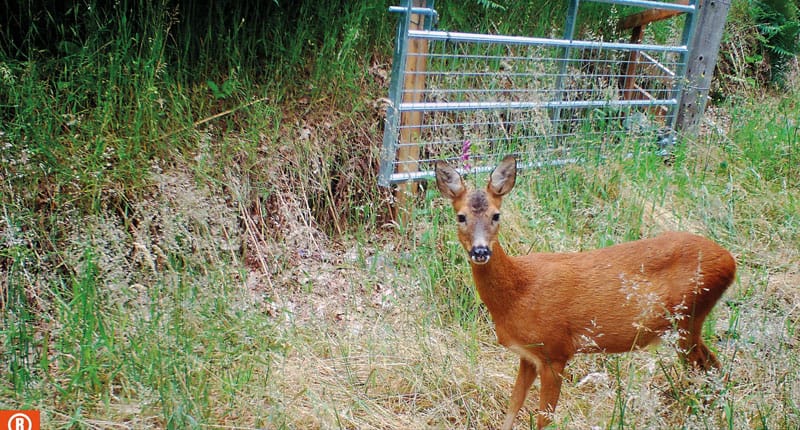
I wouldn’t want to be without my camera traps, although I only use them to identify what wildlife is coming into our garden and woodland. My first one was purchased in the USA and it was a steep learning curve getting anything of interest on it. Because these cameras are ‘motion activated’, even though I thought I had avoided it, the trains that run past the bottom of our garden were the main subjects on early efforts, or a spaniel dashing past. I always enjoy the video “The Log” on youtube by Bob’s Pennsylvania Wildlife Camera. His camera is positioned by a log across a brook and records, bears, racoons, mice, and a variety of birds during the year. Having a focal point where, as in this case, you know wildlife pass, or by putting out food to attract wildlife, will give you a far better success rate. For part of this summer I had my camera by the open gate between the field and the woodland, which is how I knew I had a roe doe and her two kids resting up in the wood on a regular basis, but I also got railway workers, badgers and a cow.
There is a wide range of these wildlife cameras available now for most budgets. If you plan to site them close to the house you can select a model with wi-fi, so you can see what it has captured from the comfort of your armchair. If you want to communicate with your camera from further away, there are the cellular cameras, or you can just visit the camera and change the SD card once in a while, which is what I do. Most models are motion activated and aside from the quality of the images, the daylight pictures will be in colour and the ones after dark, using infra red, will be in black and white. The models are improving all the time, some now have sensors that will pick up from a wider angle, and you have the choice of no glow or low glow infrared. Many of the cameras have a red light flashing while they are operating and some of the creatures spot this. A camera with no glow technology should be less obvious that a low glow at night but my Bushnell still manages to spook some creatures.
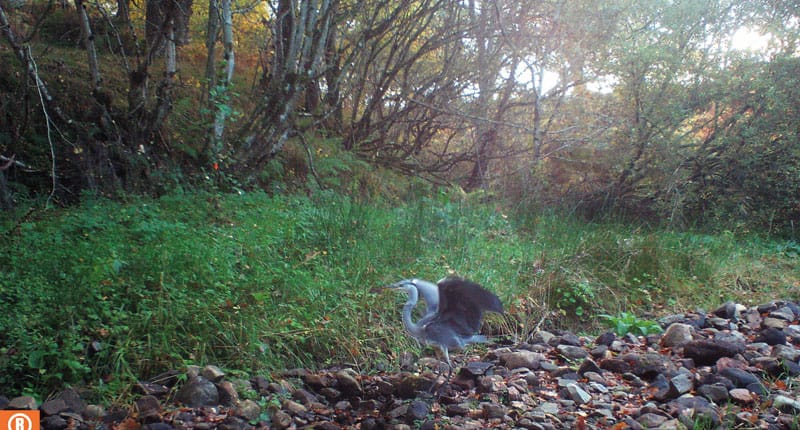
There are some excellent review pages on the internet and they go into great detail about the strengths and weaknesses of each model but you should be looking at the ability to spot wildlife; trigger time, it is no good having a camera that only fires once your subject has walked out of your frame; recovery time, so it can take more shots while the animal or bird is in the vicinity; and as mentioned before, the choice of flash, and image quality. Some of the TV footage of snow leopards and amur tigers were shot using remote cameras, so the quality of the top of the range is very acceptable.
I know that there are enthusiasts in our area who have far better pictures from their camera traps, but I am happy to just record what is passing through my garden and small woodland.
There are other types of wildlife cameras, nest box cameras are popular and you can even get night vision binoculars with cameras built in, to record what you are viewing after dark.
Perhaps one of the above would be a welcome Christmas gift for the nature lover in your family?